

.svg)
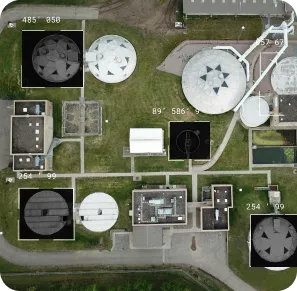
Built to deploy across complex cloud, edge, and classified environments.
All deployments operate on a hardened core. Mission environments configure on top of that core — without duplicating effort or creating technical debt.
This model:
Reduces integration risk
Speeds time to operational value
Spreads engineering cost across programs
Preserves interoperability across mission domains
Infrastructure capabilities evolve continuously. Missions benefit everywhere.

Engagement begins with structured workshops and mission build sessions we call WARLAB. Operators, analysts, and engineers work side by side against real constraints — not demo environments.
Outputs are measurable:
Defined mission scope
Data readiness assessment
Integration pathway
Deployment timeline
No slide decks. Operational clarity.
Dedicated engineering teams stay close to each mission. Specialized expertise moves across programs where it creates advantage. Licensed software engines give every mission access to proven AI capabilities without forcing a one-size-fits-all deployment model.
This approach leads to:
Faster scaling
Lower lifecycle cost
Continuous improvement cycles
Reduced operational risk
Engineering teams innovate and adapt to Department requirements. Torch learns faster. Missions benefit everywhere.
The AI Reasoning Layer operates across:
Hyperscale cloud environments
Cross-domain systems
Tactical edge nodes
Intermittent or disconnected conditions
Model optimization, compression, and hardware acceleration ensure performance within low SWaP environments.
User feedback loops are structured and recurring.
Enhancements deploy in cycles aligned to complexity — measured in days or weeks, not fiscal years. Capability evolves alongside mission demand.
Deployment is not experimentation.
It's structured, governed, and sustained. The Reasoning Layer operates today — across enterprise and tactical environments — aligned to mission demand.