


.svg)
Learn
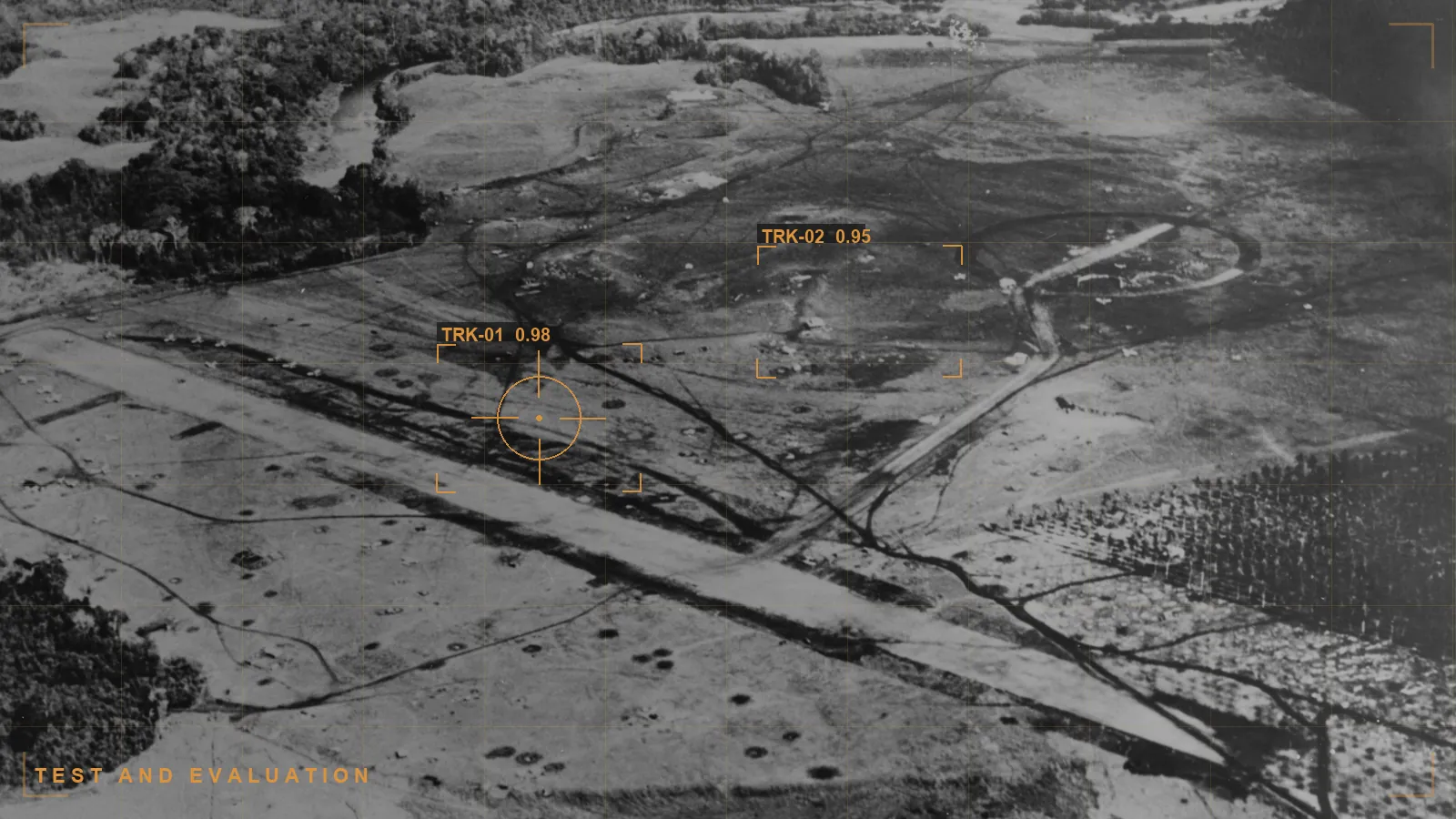
AI test and evaluation (T&E) is the disciplined measurement of an AI or machine-learning model against mission-representative data and conditions, before and during fielding, to establish how well it performs, where it fails, and whether its risks stay acceptable.
AI test and evaluation (T&E) is the disciplined measurement of an AI or machine-learning model against mission-representative data and conditions, before and during fielding, to establish how well it performs, where it fails, and whether its risks stay acceptable.
Mission AI fails quietly. A model that scored well in a lab can degrade the moment it meets real operational data, adversarial inputs, or conditions that drifted since training. For defense and government use, that gap between benchmark and battlefield is decision risk. T&E exists to close it, and to leave an auditable record of how the measurement was done so results are traceable rather than asserted. Federal guidance is converging on this: the NIST AI Risk Management Framework names Measure as a core function - analyze, benchmark, and track AI risks - and OMB M-25-21 sets minimum practices for high-impact AI, including pre-deployment testing, impact assessment, and ongoing monitoring.
Model-level evaluation asks whether the model is correct: accuracy, calibration, robustness, and failure modes measured against a benchmark dataset. Mission or operational T&E asks whether the whole capability works in the hands of real operators, under real workflows and data feeds. A model can pass evaluation and still fail operationally if its inputs, latency, or human handoffs do not match the mission. Both are required; neither substitutes for the other.
By testing against data that represents the actual mission, not a generic public set. That means evaluating on the agency's own distributions, edge cases, and adversarial conditions, then recording the score, the dataset version, and the test conditions. The NIST Generative AI Profile adds evaluation considerations specific to generative systems, where output variability and confabulation require different measurement than classification models.
A registry is a government-owned record of every fielded model and agent: its version, training provenance, evaluation results, approval decision, and current monitoring status. It is the single source of truth for what is deployed and why it was cleared. Without one, drift and accountability become unanswerable questions.
Through continuous measurement against live performance and defined thresholds, so degradation and drift are detected rather than discovered after a bad decision. The GAO AI Accountability Framework treats performance and monitoring as standing pillars, not one-time gates.
Torch.AI builds government-owned reasoning infrastructure, so evaluation records, registries, and monitoring evidence stay inside the mission environment and under the customer's control. Evaluation policy stays computable and auditable, with each determination carrying an audit trail, and VICTOR makes the institutional knowledge behind past evaluations usable. The approach complements existing systems of record rather than replacing them, so T&E results remain traceable to their source.
| T&E activity | NIST AI RMF alignment | What it produces |
|---|---|---|
| Model evaluation | Measure | Benchmark scores vs. mission data |
| Pre-deployment testing | Measure / Manage | Pass or fail decision with evidence |
| Model and agent registry | Govern / Map | Versioned, approved, auditable record |
| Ongoing drift monitoring | Measure / Manage | Threshold alerts and performance trend |
| Impact assessment | Govern | Documented risk and accountability |
Model-level evaluation asks whether the model is correct: accuracy, calibration, robustness, and failure modes against a benchmark dataset. Mission or operational T&E asks whether the whole capability works in the hands of real operators under real workflows and data feeds. Both are required; neither substitutes for the other.
By testing against data that represents the actual mission, not a generic public set: the agency's own distributions, edge cases, and adversarial conditions, then recording the score, the dataset version, and the test conditions.
A registry is a government-owned record of every fielded model and agent: its version, training provenance, evaluation results, approval decision, and current monitoring status. It is the single source of truth for what is deployed and why it was cleared.
Through continuous measurement against live performance and defined thresholds, so degradation and drift are detected rather than discovered after a bad decision. The GAO AI Accountability Framework treats performance and monitoring as standing pillars, not one-time gates.


SHARE