

Learn
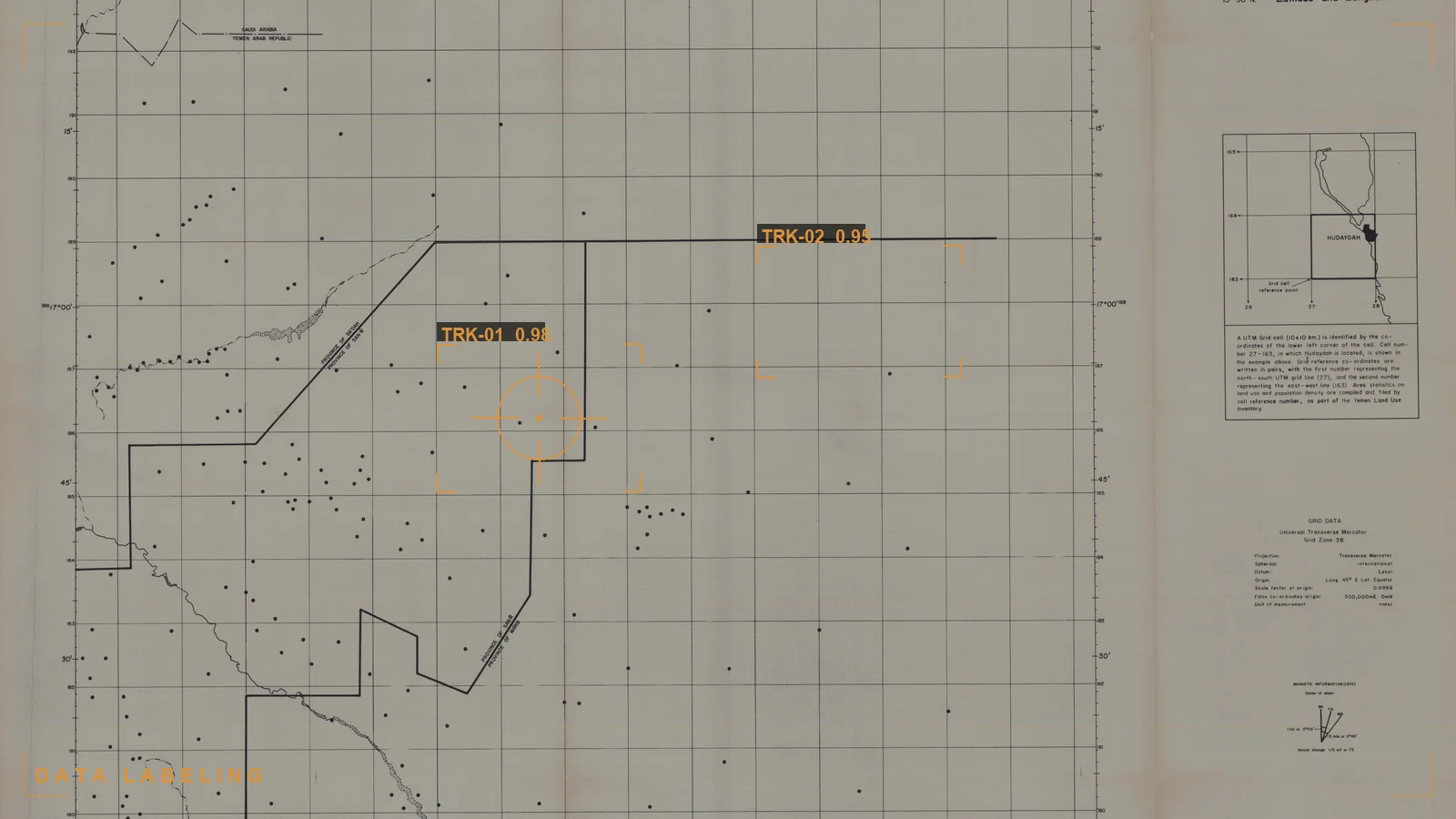
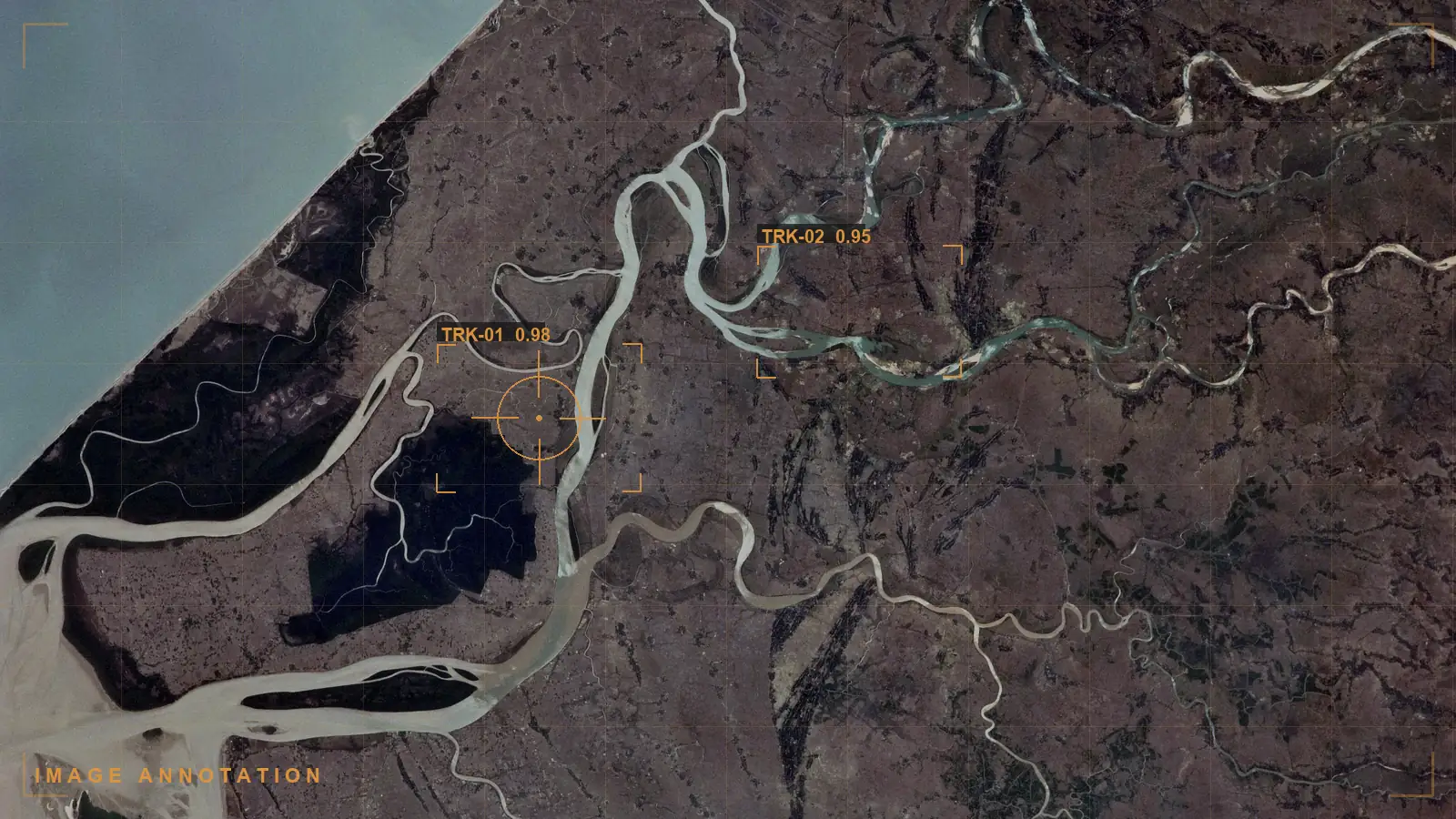
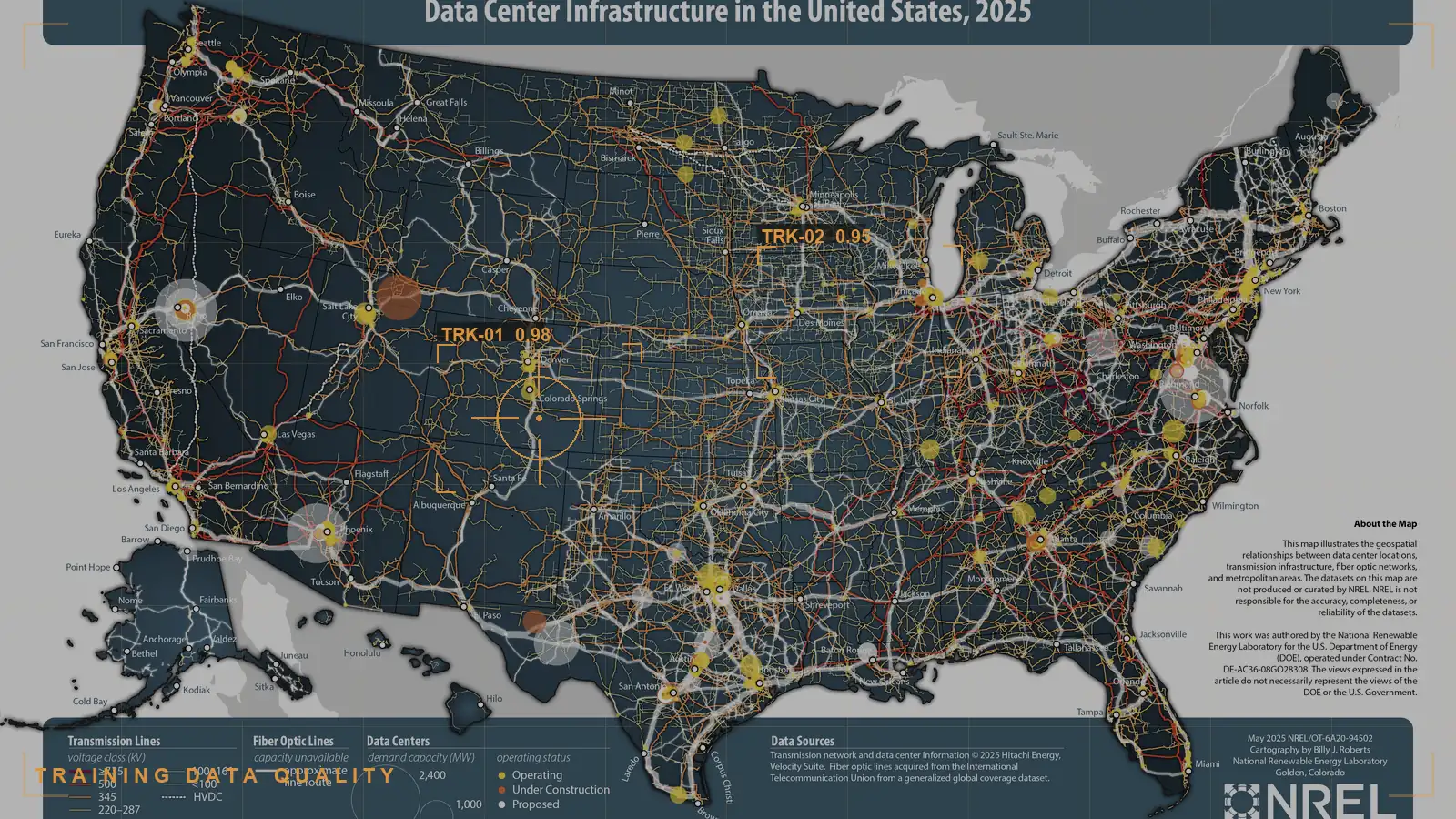
Data labeling for defense AI is the governed process of attaching accurate, mission-relevant annotations to raw multi-source data so machine-learning models can learn to recognize the objects, events, and patterns a mission depends on.
Last updated: October 19, 2026
Why it matters to your mission. A defense model is only as good as the examples it learned from, and in most programs the labeling is done once, by hand, with no record of who decided what a label meant. Data labeling for defense AI attaches accurate, mission-relevant annotations to raw multi-source data so a model can learn to recognize the objects, events, and patterns an analyst or operator actually cares about. The outcome is a model whose judgment can be trusted, traced to the labeled examples behind it, and defended when a commander asks why it called a contact the way it did.
Data labeling for defense AI is the governed process of attaching accurate, mission-relevant annotations to raw multi-source data so machine-learning models can learn to recognize the objects, events, and patterns a mission depends on. It is also called training-data annotation, ground-truth labeling, or data tagging for military machine learning. Before a model can detect a vessel, flag an indicator, or sort a report, someone has to teach it what each of those looks like by labeling enough examples, correctly and consistently.
Labeling is the step where human judgment is written into the data a model will later imitate. Every bias, gap, and mislabel in that set becomes a behavior the fielded model repeats. Getting the labels right, and keeping a record of how they were decided, is what makes everything downstream defensible.
Key takeaways
The U.S. government has made clear that data, not the algorithm, is the binding constraint on fielding military AI. In its review of AI for weapon systems, the U.S. Government Accountability Office described the problem plainly: "AI for detecting an adversary's submarines requires gathering many images of various submarines and labeling them so the AI can learn to identify one on its own" (see GAO-22-104765, Artificial Intelligence: Status of Developing and Acquiring Capabilities for Weapon Systems, 2022). The report treats usable, labeled data as a distinct acquisition challenge, separate from the model itself. The hard part is not the math. It is assembling and labeling enough representative examples of the thing you want the system to find.
That matters because a model never sees the world. It sees the labels. If submarine imagery is labeled inconsistently, if whole classes of target are missing, or if a label definition drifts between analysts, the model learns those flaws and reproduces them at machine speed in the field. A labeling error is not a one-time mistake. It is a permanent instruction the model follows every time it runs.
Defense labeling also carries a burden commercial labeling does not: it has to be explainable after the fact. When a fielded system flags a contact, a commander may need to know why, and the honest answer traces back to the examples the model was trained on. If no one recorded who applied a label, against which definition, from which source, that chain of reasoning is broken. Governed labeling, with provenance preserved, keeps the answer available.
Labeling is a governed pipeline, not a one-time annotation task. In a defense setting the stages are:
One distinction matters most: labeling is not merging. Sound defense labeling annotates records and preserves the originals with their classification and provenance. It enriches the authoritative data; it never overwrites it.
The terms are used interchangeably, and in everyday practice they mean the same activity. Where a distinction is drawn, "annotation" is the broader act of adding structured information to data (a bounding box, a transcript, a relationship), and "labeling" is the narrower act of assigning a category to an example (this image contains a submarine; this report is a threat). Both are forms of attaching meaning that a model will later learn from. The table below separates the related terms so each can be cited on its own.
| Term | What it does | Relationship to data labeling |
|---|---|---|
| Data annotation | Adds structured information to raw data: boxes, segments, transcripts, entity tags, relationships | The broader category. Labeling (assigning a class) is one kind of annotation |
| Ground truth | The verified, authoritative answer a model is trained and measured against | The product of good labeling. Labels become ground truth once adjudicated and trusted |
| Data readiness | Whether data is visible, accessible, and usable enough to build AI on | The precondition. Labeling is one step in making data AI-ready; see the pillar below |
| Synthetic data | Artificially generated examples used to augment scarce or sensitive real data | A complement. Synthetic examples still need labels, and can fill gaps labeling alone cannot |
Most labeling platforms and services were built for commercial computer vision and language tasks, then offered to defense programs. For a mission, what separates them is where the labeling can run and who keeps the labeled result. This table contrasts the typical commercial approach with government-owned reasoning infrastructure on the points that decide a mission.
| Consideration | Typical commercial approach | Government-owned reasoning infrastructure |
|---|---|---|
| Where labeling runs | Often a cloud service or outsourced workforce | Inside the customer's environment, including classified and disconnected |
| Who holds the labeled set | Resides in the vendor's platform | Customer keeps the labeled data and the label logic |
| Data it works on | Tuned for clean, open, single-source media | Multi-source, classified, adversarial, often unstructured |
| Labeler access | Uncleared, distributed annotators | Cleared analysts, access controlled by classification |
| Provenance of labels | Varies; often not traceable to source | Every label traced to source, definition, and labeler |
| Relationship to systems of record | A new platform to export data into | Complements systems of record; data stays in place |
Government-owned does not mean the government labels everything by hand, nor that the government owns a vendor's underlying tooling. It means the customer keeps control of the labeled data and the label logic, can inspect and correct them, and can run the labeling where the mission runs. Whether a specific deployment is government-owned (GOTS) or commercial (COTS) depends on the system the customer installs and purchases; the point is that the government-owned model is available, and it is the one to evaluate when ownership and auditability matter.
Torch.AI builds reasoning infrastructure the customer can own and govern, offered as a government-owned (GOTS) deployment when a mission requires it. The reasoning layer connects to mission data where it lives and makes it usable for AI without moving it out of the customer's control. ORCUS ingests and normalizes fragmented, multi-source data, including unstructured text, and preserves the provenance and classification of every record. NEXUS adds the semantic layer that makes that data meaningful, recognizing and tagging entities in text so analysts annotate at machine speed instead of by hand. HALO fuses the labeled and resolved results into relationships an analyst can trust and trace. See how this is packaged as a capability on the Torch.AI software page.
Because the labeling and enrichment run on top of the customer's existing systems of record rather than replacing them, the authoritative sources stay intact and interoperable, and the labeled training set stays the customer's, not a vendor's. This is the systems of record versus systems of reason distinction at the center of Torch.AI's approach: the reasoning layer acts as a system of reason on top of the customer's existing systems of record, with every label traceable back to the source it came from.
Data labeling is one step in a larger problem: making fragmented mission data AI-ready. For the broader picture, see the pillar on making mission data AI-ready and the companion explainer on data readiness levels.
The comparison above explains why ownership and provenance matter; the checklist below is what to actually require in an evaluation.
Evaluating a capability? The seven requirements above are the backbone of a defense data-labeling evaluation you can score vendors against. Bring them to a scoping call and we will walk each one against your environment: request a technical walkthrough.
Because a model learns from its labeled examples, not from the world. The U.S. Government Accountability Office identified gathering and labeling usable data as a distinct challenge in fielding military AI, separate from the algorithm itself. Inconsistent, incomplete, or untraceable labels become behaviors the fielded model repeats.
It is a governed pipeline: define the label schema in mission terms, assemble a representative sample, apply labels with qualified people and assistive tooling, adjudicate disagreement, preserve provenance to the source, and relabel as the mission changes. Each step protects the trustworthiness of the model trained on it.
In everyday practice they are the same activity. Where a distinction is drawn, annotation is the broader act of adding structured information to data, and labeling is the narrower act of assigning a category to an example. Both attach meaning a model later learns from.
Classified and compartmented data that cannot be sent to a commercial service, multi-source heterogeneity, adversarial subjects who deceive and change behavior, scarce cleared labelers, definition drift over time, and the requirement that a fielded model's behavior remain explainable through inspectable labels.
It is a deployment and ownership model (GOTS) in which the customer keeps control of the labeled data and the label logic, can run labeling in classified or disconnected environments, and can inspect and correct the training set independently of any single vendor. The same capability can also be delivered commercially (COTS); which one applies depends on the system the customer installs and purchases.
It should not. Sound defense labeling annotates records and preserves the originals with their classification and provenance intact, so the training set can be inspected and corrected. It enriches the systems of record; it does not replace them.


Describe the problem.
Define the constraints. We will structure the session.
No demo.
No slide deck.
Real work.
Describe the problem.
Define the constraints. We will structure the session.
No demo.
No slide deck.
Real work.