Learn
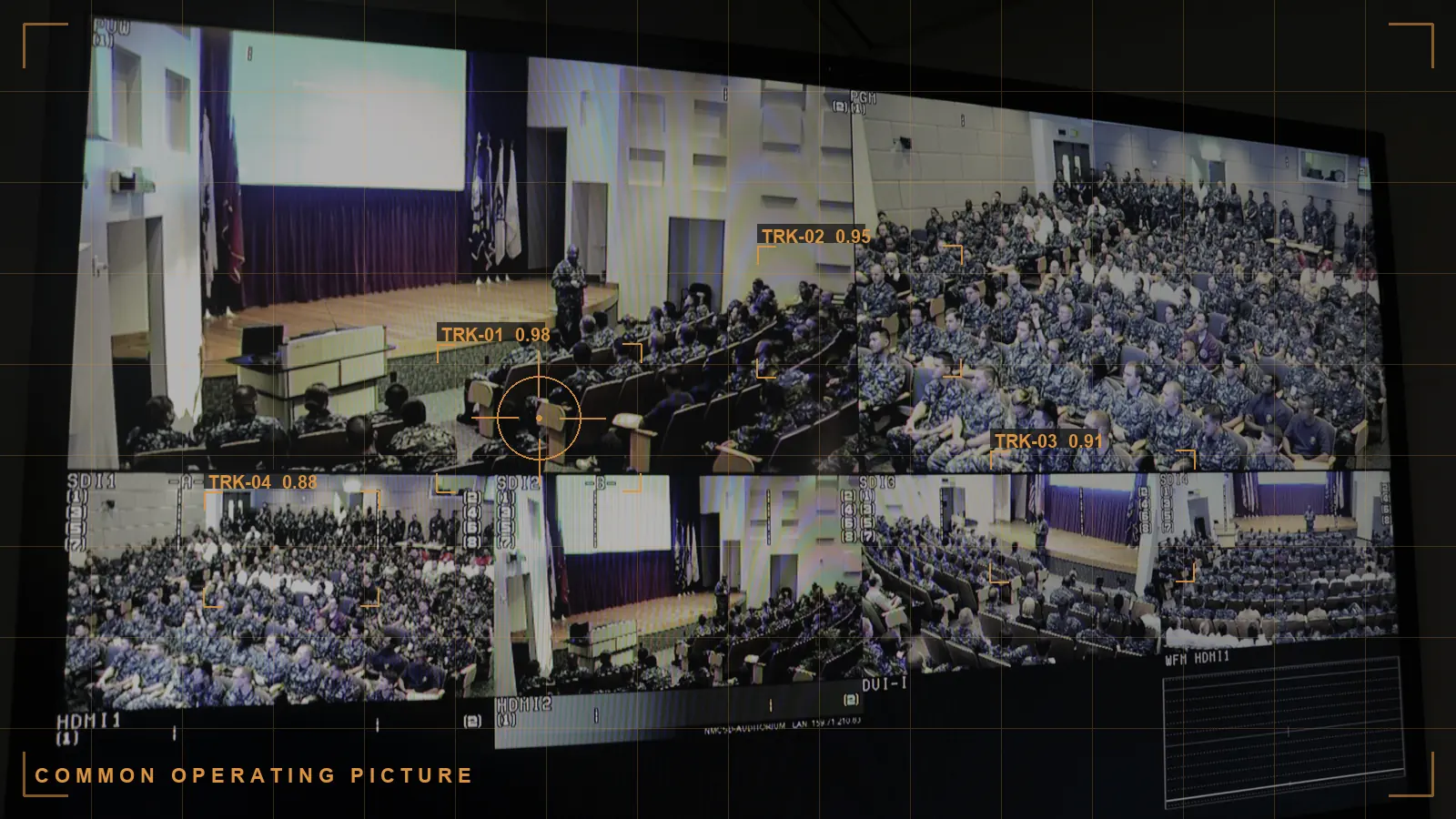
A common operating picture (COP) is a single, identical display of relevant information shared by more than one command that supports collaborative planning and helps every echelon achieve a shared awareness of the operational situation.
Last updated: October 19, 2026
Why it matters to your mission. When two commands look at the same operation on two different screens built from two different sets of data, they plan against two different realities, and the gap shows up at the worst moment. A common operating picture gives every echelon one identical, shared view of the situation. The outcome is collaborative planning and coordinated action against a single, agreed picture instead of reconciled guesses.
A common operating picture (COP) is a single, identical display of relevant information shared by more than one command that supports collaborative planning and helps every echelon achieve a shared awareness of the operational situation.
That definition is deliberately strict on one word: identical. A COP is not a loose collection of dashboards that each command interprets its own way. It is the same relevant information, presented so that a higher headquarters, a subordinate unit, and a supporting command are all reasoning over the same operational reality. The hard part is almost never the display. It is assembling one trustworthy picture from dozens of systems that were never built to agree.
This page sits under the pillar CJADC2 and Open DAGIR Data Integration, because a modern COP is the output of the data-integration problem that effort is trying to solve.
Key takeaways
The authoritative definition comes from U.S. joint doctrine. A common operational picture is "a single, identical display of relevant information shared by more than one command that facilitates collaborative planning and assists all echelons to achieve situational awareness" (U.S. Joint Chiefs of Staff, Joint Publication 3-0, Joint Operations). The terms "common operating picture" and "common operational picture" are used interchangeably in practice; the doctrinal term of record is common operational picture, abbreviated COP.
Two parts of that definition carry the weight. "Single, identical" means every command is looking at the same information, not a local copy that has drifted. "Facilitates collaborative planning" means the COP exists to let separate commands plan and act together, not just to inform one staff. A display that is close enough or roughly synchronized is not a COP in the doctrinal sense, because the small differences are what produce conflicting plans.
Doctrine also recognizes that no single display serves everyone perfectly. A fires cell, an intelligence section, and a logistics staff each need a different cut of the picture. That is why practitioners also use the term user-defined operational picture (UDOP): a tailored view drawn from the same underlying shared data, so the cuts stay consistent with one another even when the display differs. The COP is the shared foundation; the UDOP is the role-specific lens onto it.
These two terms get treated as the same thing. They are not. A common operating picture is the shared information; situational awareness is the understanding a person forms from it. You can distribute a perfect COP and still have poor situational awareness if the picture is not interpreted in context, and doctrine frames the COP as the thing that assists commands in achieving situational awareness, not as awareness itself.
The distinction matters for what you require of a system. Improving the display alone raises the ceiling on awareness but does not guarantee it. What a COP has to get right is upstream of the screen: that the information is complete, current, consistent across commands, and traceable to its source. The table below separates the layers so each can be evaluated on its own.
| Layer | What it is | Where it lives | Failure mode |
|---|---|---|---|
| Common operating picture | The single, identical, shared set of relevant information | Across systems, displayed to many commands | Picture is incomplete, stale, or not actually identical between commands |
| Situational awareness | An individual's perception of the elements in the environment | In the mind of the commander or analyst | Correct picture, wrong or incomplete interpretation |
| Situational understanding | The meaning and implications drawn from awareness | In the mind, applied to the decision | Awareness without the "so what" for the decision at hand |
Buying a better map viewer improves the top layer only. A COP that drives better decisions has to fix the information underneath, which is a data-integration problem, not a display problem.
The idea of one shared picture is simple. Producing one from the systems a force actually runs is not. The information that should feed a COP lives in many separate systems that were developed independently, hold data in different formats and structures, update at different rates, and sit at different classification levels. Nothing about them was designed to line up into one identical display.
U.S. government oversight has documented how acute this is. The Government Accountability Office found that operations centers rely on a manual "swivel chair" process, where personnel read data off one system's display and retype it into another, because the underlying systems cannot share directly and arrive at different classification levels and formats (U.S. Government Accountability Office, Defense Command and Control, GAO-25-106454, 2025). The same report describes stovepiped, proprietary system designs that cannot easily communicate, and classification markings such as "Not Releasable to Foreign Nationals" that are difficult to change once applied and that block sharing with partners.
That is the real COP problem. The display is the last five percent. The other ninety-five percent is reconciling fragmented, multi-source, multi-level data into something that is genuinely identical across commands and current enough to act on. The failure modes follow directly:
A current, trustworthy COP across a joint and coalition force is one of the central outcomes the Department of Defense is pursuing through Combined Joint All-Domain Command and Control (CJADC2). The aim is to let commanders sense the environment, make sense of it, and act at the speed of relevance by connecting data across all domains and all partners into decision-ready information (U.S. Department of Defense, Summary of the Joint All-Domain Command and Control (JADC2) Strategy, 2022). A shared picture that joint and coalition forces can all reason over is what "make sense" looks like in practice.
The oversight record points to one architecture: this picture is produced by federating existing systems, not by migrating everyone onto one new central repository. The data stays in its authoritative systems of record, and a common data layer connects it, preserves its meaning, and presents a consistent view. For how that layer is designed, see CJADC2 architecture: the common data layer. The COP is the human-facing result of getting that integration right: one picture, assembled from many owned systems, that every command can trust.
Torch.AI treats the COP as a data problem before it is a display problem, and builds government-owned reasoning infrastructure that the customer can own and govern. The approach connects to mission data where it already lives, across fragmented, multi-source systems, and transforms it into coherent understanding at machine speed without displacing the systems of record it came from. The reasoning layer does the work a shared picture depends on:
Because the layer reasons on top of the authoritative systems rather than replacing them, every element in the picture keeps a line back to the source it came from, with its classification intact, and the picture can run from the enterprise to a disconnected, degraded environment. That is the difference between a map that looks shared and a COP that different commands can actually trust and defend. You can see how this is packaged as a capability on the Torch.AI software page.
Use this as an evaluation checklist for any system that claims to deliver a COP. The display is table stakes; these are the properties that decide whether the picture is actually shared and trustworthy.
Evaluating a capability? The eight requirements above are the backbone of a defensible COP evaluation. Bring them to a scoping call and we will walk each one against your environment: request a technical walkthrough.
U.S. joint doctrine defines a common operational picture as a single, identical display of relevant information shared by more than one command that facilitates collaborative planning and assists all echelons to achieve situational awareness (Joint Publication 3-0). Common operating picture and common operational picture are used interchangeably; both abbreviate to COP.
A COP is the shared information; situational awareness is the understanding a person forms from it. Doctrine frames the COP as the thing that assists commands in achieving situational awareness, not as awareness itself, so a perfect picture can still produce poor awareness if it is not interpreted in context.
Because the picture has to be assembled from many separate systems with different formats, update rates, and classification levels, often reconciled by hand. The GAO has documented operations centers using a manual swivel-chair process to move data between systems that cannot share directly (GAO-25-106454).
A current, trustworthy COP across a joint and coalition force is a central outcome CJADC2 is pursuing: connecting data across all domains and partners so commanders can sense, make sense, and act at the speed of relevance. The shared picture is what make sense looks like in practice.
No. A user-defined operational picture (UDOP) is a tailored, role-specific view drawn from the same underlying shared data. The COP is the shared foundation; the UDOP is a lens onto it, so a fires cell and an intelligence section can see different cuts that remain consistent with one another.
It should not. A modern COP is best produced by federating existing systems of record and connecting their data through a common layer, keeping the authoritative data where it lives and preserving its provenance, rather than migrating everything into one new central repository.


Describe the problem.
Define the constraints. We will structure the session.
No demo.
No slide deck.
Real work.
Describe the problem.
Define the constraints. We will structure the session.
No demo.
No slide deck.
Real work.