Learn
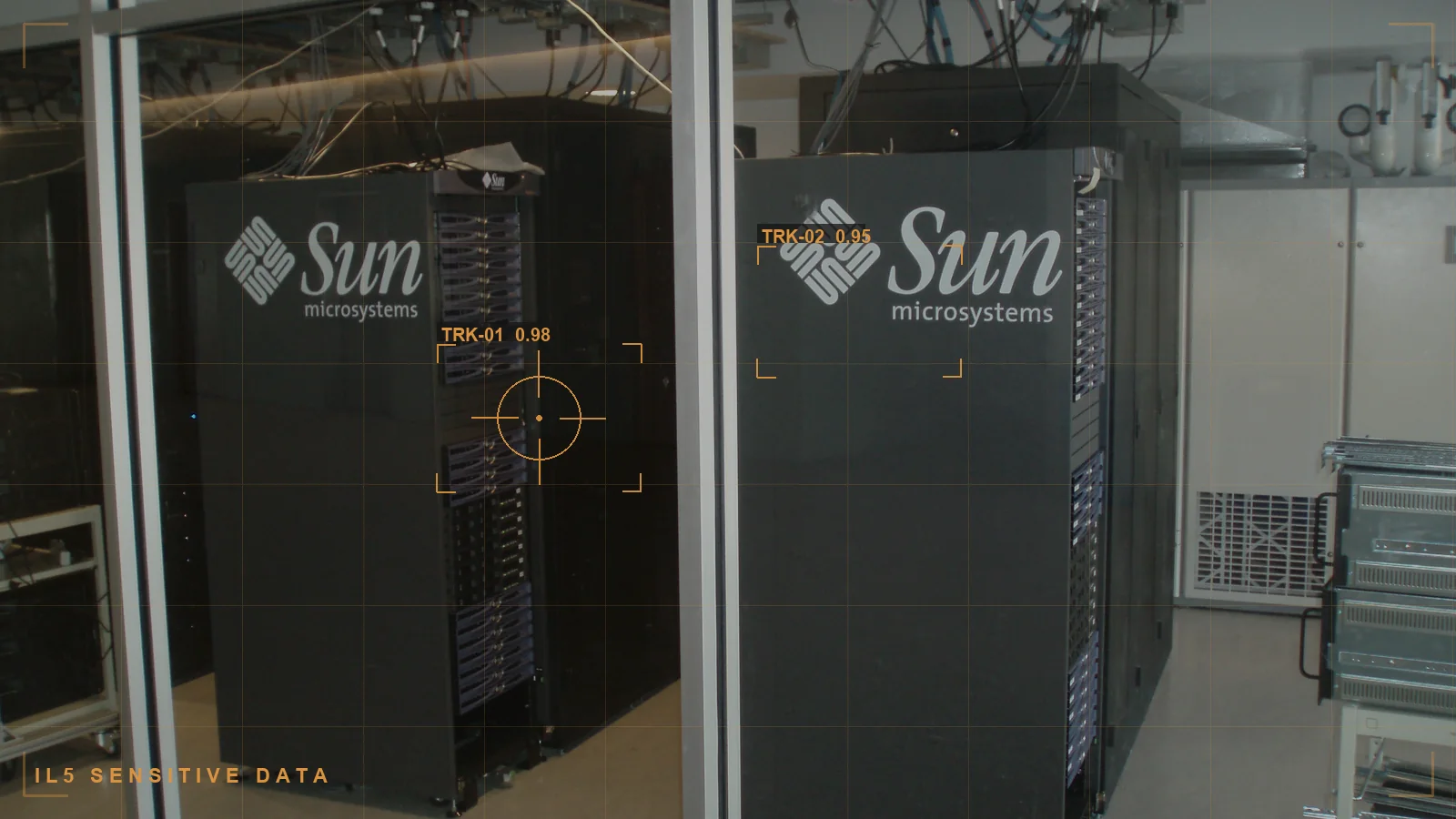
IL5 is the highest DoD cloud impact level for sensitive unclassified data (higher-sensitivity CUI and unclassified national security systems), while IL6 is the first impact level for classified data up to SECRET, which must run on a dedicated, isolated enclave connected only to the classified network that a commercial cloud is not authorized to host.
Last updated: October 19, 2026
Why it matters to your mission. A capability accredited only for sensitive unclassified data cannot touch a classified mission, and discovering that late can strand a program on the wrong side of the line. IL5 and IL6 name the two Department of War impact levels where that line sits: the last one for unclassified data and the first one for classified. The outcome is knowing, before you build or buy, exactly which environment your mission data forces you into and what a capability has to meet to run there.
IL5 is the highest DoD cloud impact level for sensitive unclassified data (higher-sensitivity CUI and unclassified national security systems), while IL6 is the first impact level for classified data up to SECRET, which must run on a dedicated, isolated enclave connected only to the classified network that a commercial cloud is not authorized to host. The gap between them is not one more notch of rigor. It is the boundary where data stops being unclassified and becomes classified, and the hosting model changes with it.
Both levels are defined in the same authoritative framework, the Defense Information Systems Agency's Cloud Computing Security Requirements Guide, the document a cloud service offering is measured against before it can be authorized to hold DoD data (DISA, DoD Cloud Computing Security Requirements Guide, via the DoD Cyber Exchange). This page is a focused comparison of those two levels. For the full ladder, including IL2 and IL4 and why there is no official IL7, see the pillar, DoD Cloud Impact Levels Explained.
Key takeaways
The difference is the classification of the data each level is built to protect. IL5 is for the most sensitive unclassified information: higher-sensitivity Controlled Unclassified Information (CUI) and unclassified national security systems, the systems whose function involves intelligence, cryptologic activity, or command and control of forces. IL6 is for classified information up to SECRET. That is the whole hinge. Everything else about how each level is hosted and run follows from which side of the unclassified-to-classified boundary the data sits on.
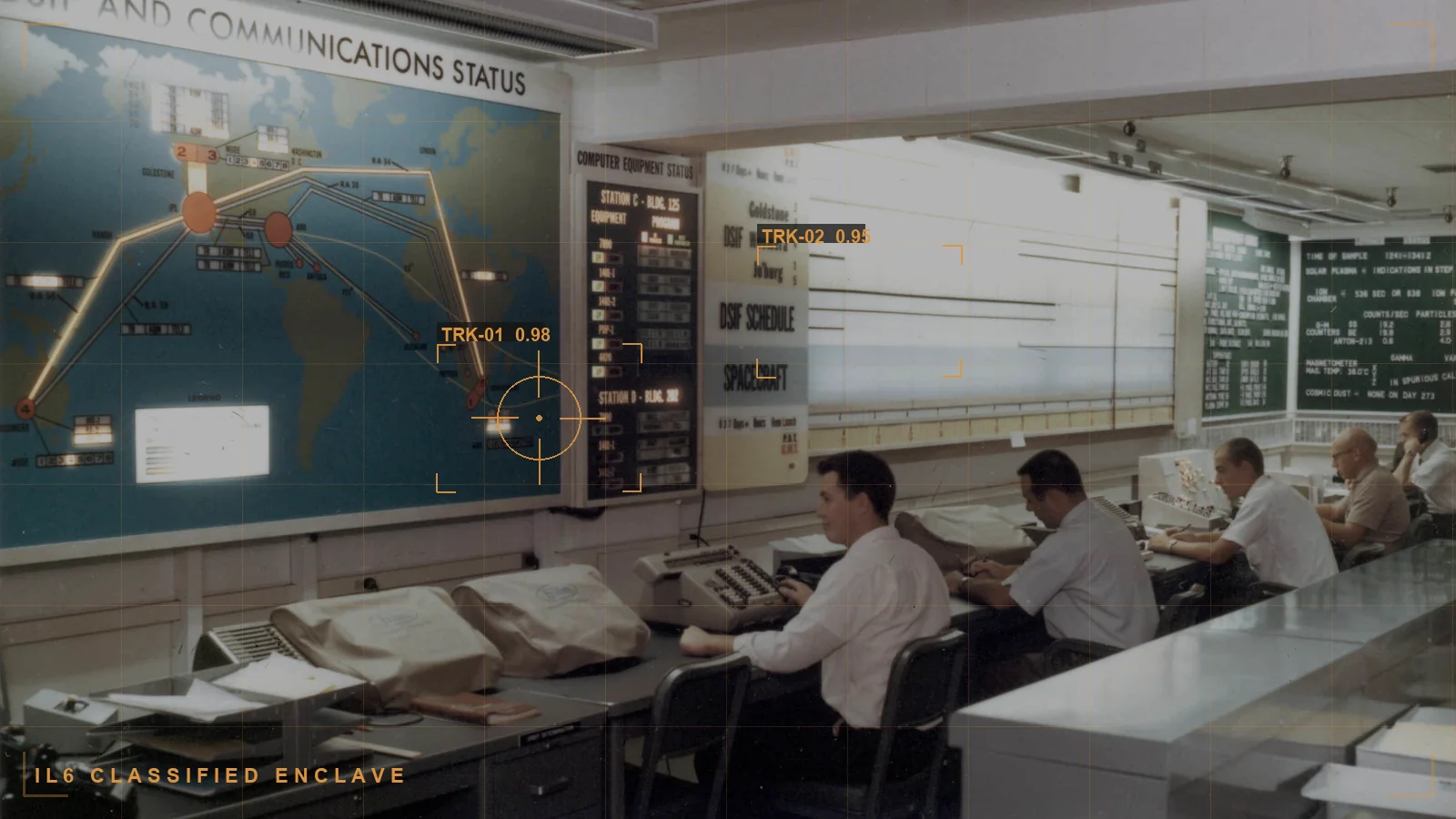
Because IL5 data is still unclassified, it can run on DoD-authorized infrastructure, built on a FedRAMP High foundation, with dedicated resources and U.S.-citizen administration. Because IL6 data is classified, it cannot. IL6 must run on a dedicated cloud infrastructure in a facility approved for processing classified information, treated as an enclave of the classified SECRET network and connected only to it. The Security Requirements Guide is explicit that such infrastructure, being dedicated to classified processing, cannot be a commercial provider of cloud services.
The table below sets the two side by side at the level that decides a deployment.
| Dimension | IL5 | IL6 |
|---|---|---|
| Classification of data | Unclassified (highest-sensitivity CUI and unclassified national security systems) | Classified, up to SECRET |
| Position on the ladder | Top of the unclassified range | First classified level |
| Authorization baseline | FedRAMP High plus DoD controls | FedRAMP High plus DoD controls, assessed as a classified enclave |
| Hosting model | DoD-authorized cloud with dedicated resources | Dedicated, isolated infrastructure in a classified-processing facility |
| Network it connects to | Unclassified DoD network | The classified SECRET network only, as a self-contained enclave |
| Commercial cloud eligible | Yes, when authorized | No; dedicated classified infrastructure is not a commercial service |
| Personnel | U.S.-citizen administration | U.S.-citizen administration plus classified-facility access requirements |
IL6 changes what kind of place the data is allowed to live in. Hardening the controls on an IL5 system does not get you there.
Because it is the only step on the impact-level ladder that crosses the classification boundary. IL2, IL4, and IL5 are all unclassified; they differ in how sensitive the unclassified data is and how much separation it needs. The move to IL6 is categorically different: the data is now classified, and classified data carries legal and physical handling requirements that no amount of control-hardening on an unclassified system can satisfy.
That is why a capability authorized at IL5 is not "most of the way" to IL6. An IL5 system can be excellent and still be ineligible for a SECRET mission, because the enclave, the facility, and the classified-network connection are not features you switch on. They are the environment the data is legally required to live in. For a program, that means the classification of the mission data, decided upstream, dictates the deployment model downstream. Choosing a tool that can only exist in a commercial cloud region forecloses IL6 before the work begins.
No, not as a commercial service. The Security Requirements Guide requires IL6 data to be stored and processed in dedicated cloud infrastructure located in facilities approved for processing classified information, and it states plainly that such infrastructure cannot be considered a commercial provider of cloud services. The IL6 environment is a closed, self-contained enclave of the classified SECRET network, connected only to that network and walled off from unclassified networks and the public internet.
This is the single most consequential practical difference from IL5. At IL5, authorized commercial infrastructure can play a role within DoD rules. At IL6, the deployment has to be dedicated and government-controlled, in a classified facility, on the classified network. A service that offers an "IL6 region" alongside its commercial offerings is describing dedicated, separate infrastructure, not the same commercial cloud with stricter settings.
They share more than the dividing line suggests, which is why they are so often discussed together. Both are defined in the same DISA Cloud Computing Security Requirements Guide, and both build on a FedRAMP High baseline with additional DoD controls. Both require that the data reside in facilities under the exclusive legal jurisdiction of the United States, and both require U.S.-citizen administration. Both are levels where ownership and control of the deployment, not just the controls on paper, decide whether a capability can actually serve the mission.
The commonalities are why a capability built for the demands of IL5, with dedicated resources and U.S.-controlled operation and no dependence on a general commercial region, is better positioned to extend to IL6 than one built only for lower levels. It is not automatic, because the classified enclave and facility requirements are real and additional, but the posture is closer.
For defense AI the rule is the same as for any other capability, and the IL5-to-IL6 line is where it bites hardest: an AI can only operate on data it is accredited to touch. If the mission data is classified at SECRET, the AI has to run inside the IL6 enclave, on the classified network, in a classified facility. An AI that exists only in a commercial cloud region cannot serve that mission at all, regardless of how capable it is. Even at IL5, the dedicated-resource and U.S.-citizen-administration requirements rule out a general commercial service that cannot meet them.
This is why the deployment model, not just the algorithm, is a first-order question at these levels. A capability the government can run on its own infrastructure can operate at IL5 and inside the dedicated, isolated environment IL6 requires, where a commercial-cloud-only tool cannot. The classification of the data sets the bar; the ownership model decides whether a capability can clear it. Independent oversight has flagged the related risk on the acquisition side: the U.S. Government Accountability Office, in Cloud Computing: Federal Government Needs to Address Procurement Challenges (GAO-26-107530, 2026), found agencies pursuing standard contract clauses to establish unrestricted rights to federally owned data and to avoid vendor lock-in, the same control concern that deciding between a commercial and a government-owned deployment turns on.
Torch.AI builds government-owned reasoning infrastructure the customer can own and govern, deployable on the infrastructure a mission's impact level requires rather than confined to a commercial cloud region. Because the reasoning layer can be deployed government-owned, it can run where IL5 allows and inside the dedicated, isolated enclave IL6 demands, on the classified network and in a classified facility, instead of being stranded on the unclassified side of the line.
Where the public products fit: ORCUS connects to fragmented, multi-source data where it already lives and preserves provenance across systems; NEXUS turns that data into a semantic representation the mission can reason over; and HALO fuses resolved entities into relationships an analyst can trust and trace. For an accreditation conversation, the same reasoning infrastructure can be deployed at the impact level the mission data forces, rather than requiring the data to come down to the tool's level. Ownership varies by deployment and purchase (government-owned or commercial); the government-owned model is the one to evaluate when the mission runs at IL6 and the deployment has to be government-controlled. You can see how this is packaged as a capability on the Torch.AI software page.
This is the systems of record versus system of reason distinction at the center of Torch.AI's approach: existing systems keep recording the authoritative data at whatever level it is classified, and the reasoning layer runs alongside them, accredited for the same environment, rather than forcing the mission into a lower impact level to use it.
Scoping a capability that has to clear IL5 or IL6? Bring these seven requirements to a technical walkthrough and we will walk each one against your environment and the impact level your mission data forces: request a technical walkthrough.
IL5 is the highest DoD cloud impact level for sensitive unclassified data (higher-sensitivity CUI and unclassified national security systems); IL6 is the first impact level for classified data up to SECRET. The step between them crosses the unclassified-to-classified boundary, and IL6 must run on a dedicated, isolated enclave on the classified network that a commercial cloud is not authorized to host.
Because it is the only step on the impact-level ladder that crosses the classification boundary. IL2, IL4, and IL5 are all unclassified; IL6 is classified. Classified data carries legal and physical handling requirements, including a dedicated classified facility and the classified network, that no amount of hardening on an unclassified system can satisfy.
No, not as a commercial service. The DISA Cloud Computing Security Requirements Guide requires IL6 data to reside in dedicated infrastructure in a facility approved for classified processing, treated as an enclave of the classified SECRET network, and states that such infrastructure cannot be a commercial provider of cloud services. IL5, being unclassified, can use DoD-authorized commercial infrastructure.
Both are defined in the same DISA Cloud Computing Security Requirements Guide, both build on a FedRAMP High baseline with added DoD controls, both require U.S.-based facilities and U.S.-citizen administration, and both are levels where ownership and control of the deployment decide whether a capability can serve the mission.
An AI can only operate on data it is accredited to touch. If the mission data is classified at SECRET, the AI has to run inside the IL6 enclave on the classified network; an AI that exists only in a commercial cloud region cannot serve it. This is why a government-owned deployment the customer can run on its own infrastructure matters most at IL6.


Describe the problem.
Define the constraints. We will structure the session.
No demo.
No slide deck.
Real work.
Describe the problem.
Define the constraints. We will structure the session.
No demo.
No slide deck.
Real work.