Learn
Pattern-of-life analysis is the intelligence technique of studying an entity's observed activities across many sources over time to establish its normal routine - where it goes, when it is active, and who it interacts with - so analysts can detect deviations and anticipate what it will do next.
Last updated: October 19, 2026
Why it matters to your mission. A subject of interest leaves traces across signals, imagery, human, open-source, and movement reporting, but those traces sit in separate systems and no one has time to line them up by hand. Pattern-of-life analysis reconstructs the subject's recurring activity over time so the routine, and any break from it, becomes visible. The outcome is an analyst who can anticipate what a watched entity does next instead of reacting after it has already acted.
Pattern-of-life analysis is the intelligence technique of studying an entity's observed activities across many sources over time to establish its normal routine - where it goes, when it is active, and who it interacts with - so analysts can detect deviations and anticipate what it will do next. It is sometimes called pattern analysis, activity pattern analysis, or a component of activity-based intelligence. It is built on top of resolved entities and fused multi-source reporting; you cannot pattern an entity you have not first assembled from its fragments.
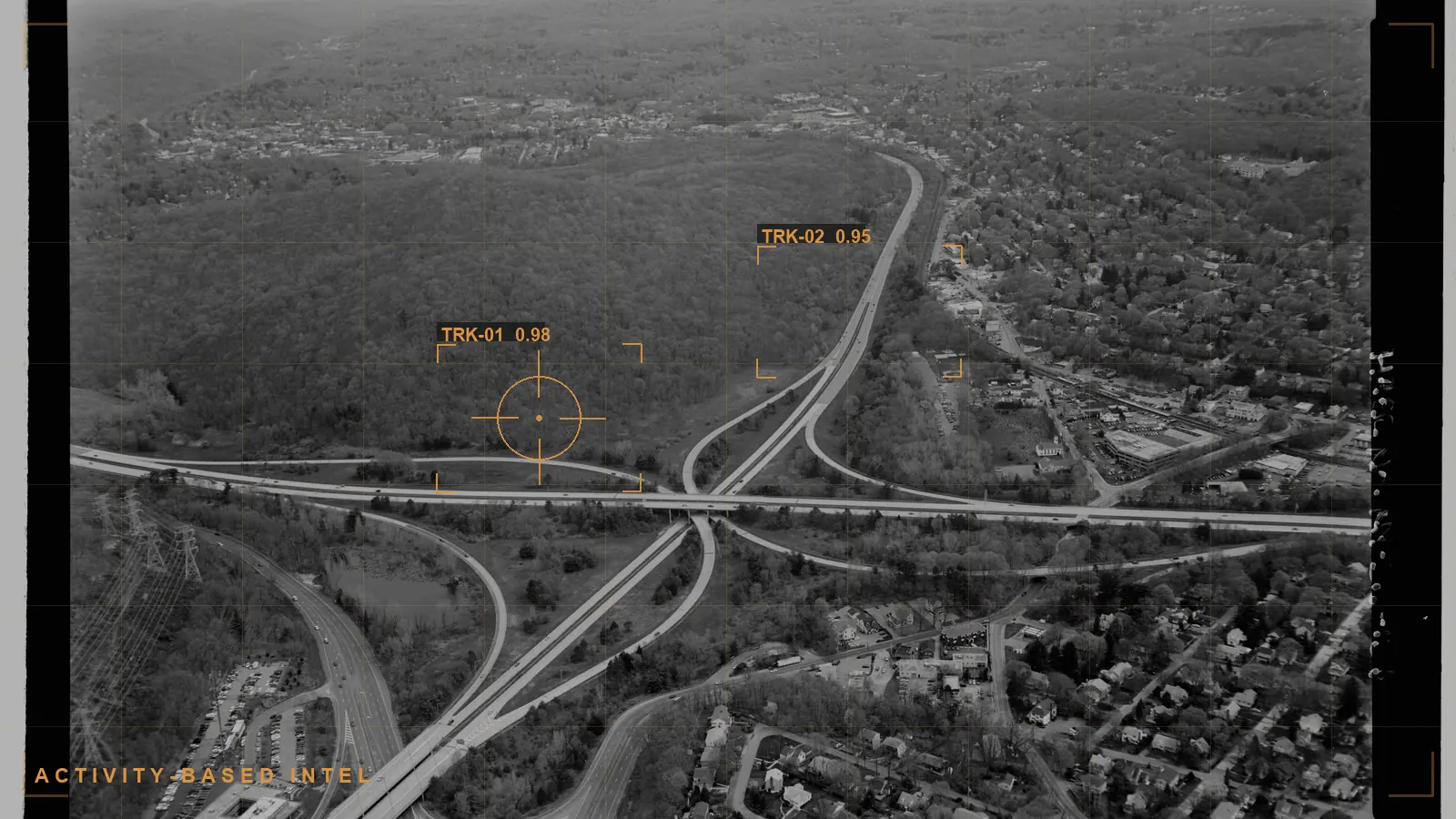
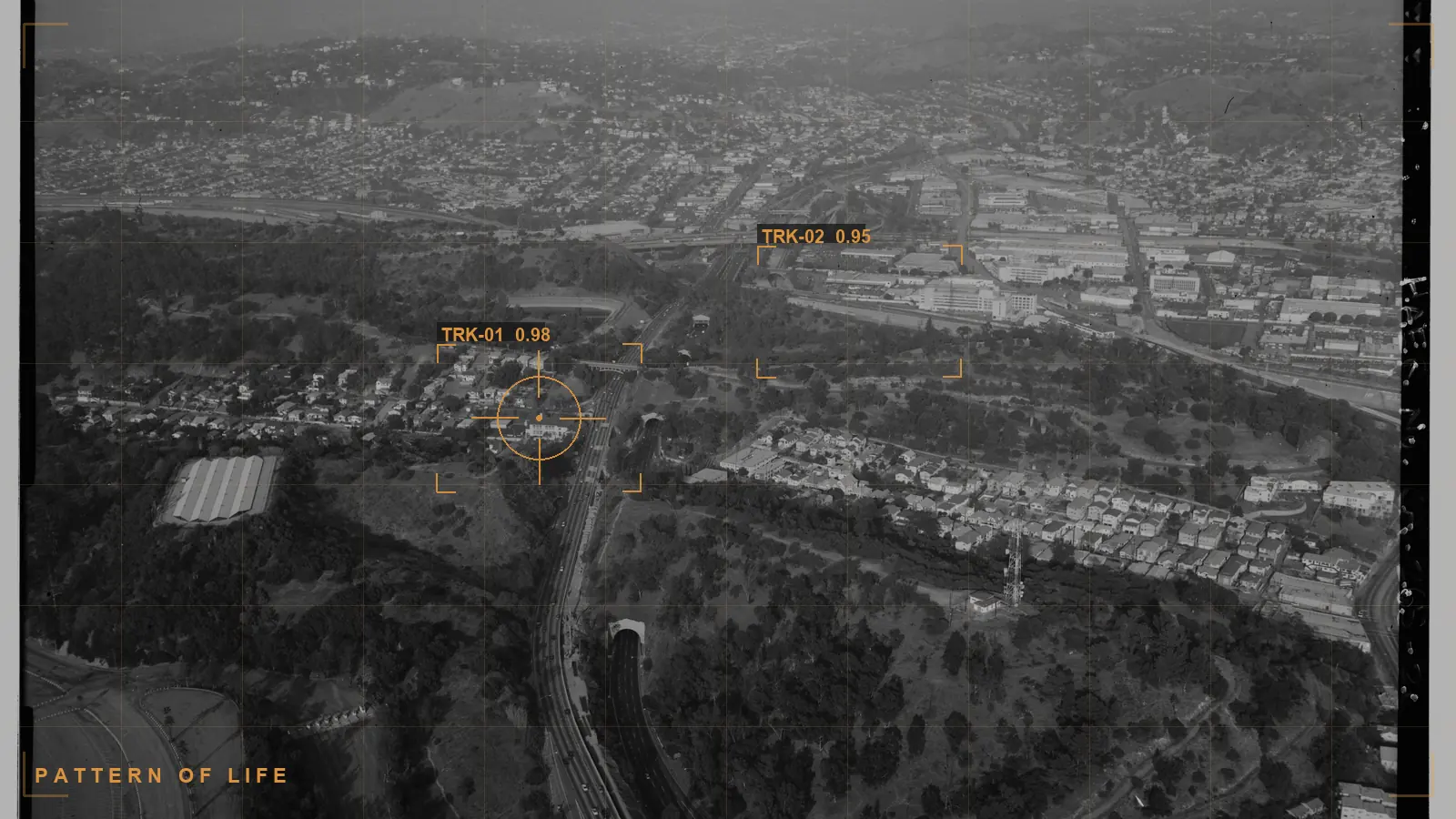
A pattern of life is not a single report. It is the accumulation of many observations, placed in time and space, until a routine emerges and the exceptions stand out against it. The analytic value is in the exceptions: the night the usual vehicle does not appear, the new number that joins the network, the facility that goes quiet before an operation.
Key takeaways
Most mission questions are not "what happened once." They are "what does this entity normally do, and what does a change in that routine mean." A single sighting tells you an entity exists. A reconstructed pattern of life tells you when it is vulnerable, when it is preparing, and when something has shifted.
Consider a facilitator under watch. One geospatial track of a vehicle at a compound is a data point. Thirty tracks over two months, correlated with when a phone is active and when payments move, is a routine: the compound is used on specific nights, the vehicle arrives before the phone goes active, and the money follows within a day. Now the exception carries meaning. When the vehicle appears on an unusual night and the phone stays dark, that break from the baseline is the indicator worth a collection decision.
This is where the cost of getting the earlier steps wrong compounds. If two different people were resolved into one entity, the pattern averages two lives and describes neither; if a real match was missed, half the routine is invisible. Pattern-of-life analysis inherits every error in the entity resolution and fusion beneath it and amplifies it into a confident-looking conclusion, which is why the discipline sits on resolved, fused, provenance-bearing data and not raw feeds.
The Department of War treats the underlying data problem as a program-level obstacle, not a detail. Independent oversight has found that for defense AI, usable and labeled data, not the algorithm, is the central bottleneck: the U.S. Government Accountability Office reports that building an AI capability to detect an adversary's submarines "requires gathering many images of various submarines and labeling them so the AI can learn to identify one on its own" (see GAO, Artificial Intelligence: Status of Developing and Acquiring Capabilities for Weapon Systems, GAO-22-104765, 2022). Pattern-of-life analysis is the same problem at the behavioral level: without fused, resolved, time-stamped observations, there is no baseline to pattern and no anomaly to detect.
Pattern-of-life analysis is a pipeline that runs on top of fused data, not a single algorithm. In an intelligence setting the stages are:
The sorting technique is doctrinal, not novel. U.S. Army intelligence doctrine lists pattern analysis, chronologies, and link analysis among its structured analytic techniques, because a routine only becomes visible once scattered observations are arranged against time and against each other.
A pattern of life is only as rich as the observations it draws on, and no single discipline is enough. It combines:
Two properties matter as much as the sources. First, time: every observation needs a reliable timestamp, because the pattern lives in the temporal structure, not the raw count. Second, provenance: because a pattern-of-life conclusion can drive a collection or operational decision, each observation has to stay traceable to its source and classification, so an analyst can defend why the baseline looks the way it does and why an anomaly was called.
These terms travel together and are often blurred. They describe different scopes. The table separates them so each can be cited on its own.
| Dimension | Pattern-of-life analysis | Activity-based intelligence |
|---|---|---|
| Primary focus | The recurring routine of a specific entity over time | Activities and transactions in an area or domain, resolving entities from the activity |
| Starting point | Usually a known or suspected entity of interest | Often the activity first; the actor is derived from it |
| Core question | What does this entity normally do, and what changed | What is happening here, and who is behind it |
| Typical output | A baseline routine and its anomalies for one entity or network | Correlated activity that surfaces relationships and emerging entities |
| Relationship | A technique within, and an input to, the broader discipline | The broader discipline; pattern of life is one of its methods |
Pattern-of-life analysis is one of the methods inside activity-based intelligence, applied once you have an entity worth watching. Both depend on the same foundation of resolved, fused, time-stamped, multi-source data.
Torch.AI builds reasoning infrastructure the customer can own and govern, available as a government-owned (GOTS) deployment when a mission requires it. It produces the foundation pattern-of-life analysis depends on, not the pattern-of-life product itself. The reasoning layer connects to mission data where it lives and does not replace the systems of record it draws from.
Three capabilities map to the problem this page describes. NEXUS makes fragmented data meaningful: it normalizes records and extracts entities and events from unstructured text, so observations carry consistent, time-stamped representation. HALO resolves records into one entity through graph-based fusion and ties it to the people, places, and objects that recur around it, which is the network and temporal structure a pattern of life is read from. ORCUS provides the multi-source ingestion, normalization, and cross-classification data availability underneath both, so observations from different disciplines and classification levels can be correlated without being improperly pooled. Every resolved entity and relationship stays traceable to its sources. See how this is packaged as a capability on the Torch.AI software page.
Because the reasoning layer acts as a system of reason on top of the customer's existing systems of record, the authoritative observations stay intact and interoperable, and an analyst can inspect why the baseline looks the way it does and why an anomaly was flagged. The harder the entity resolution and multi-INT fusion problem, the more the underlying infrastructure decides whether the resulting pattern can be trusted. For the pillar behind this page, see multi-INT fusion.
For evaluators scoping a capability, see how Torch.AI delivers entity resolution and graph-based fusion on multi-INT data, deployable government-owned, on the software page, or request a technical walkthrough.
A pattern-of-life capability is only as trustworthy as the data and the traceability beneath it. Require:
Evaluating a capability? These requirements are the backbone of a pattern-of-life evaluation you can score against. Bring them to a scoping call and we will walk each one against your environment: request a technical walkthrough.
It is the intelligence technique of studying an entity's observed activities across many sources over time to establish its normal routine - where it goes, when it is active, and who it interacts with - so analysts can detect deviations and anticipate what it will do next.
Because most mission questions turn on what an entity normally does and what a change in that routine means; a reconstructed pattern of life tells an analyst when a subject is preparing, when it is vulnerable, and when something has shifted, which a single sighting cannot.
It resolves observations to one entity, assembles multi-source reporting in time and space, establishes a baseline routine, maps the surrounding network with link analysis, detects deviations from the baseline, adjudicates anomalies with an analyst, and keeps every observation traced to its source.
Multi-source observations - geospatial and movement, signals and technical, human and open-source, and transactional records - each with a reliable timestamp and provenance back to its source, tied to one resolved entity.
Pattern-of-life analysis reconstructs the recurring routine of a specific entity over time; activity-based intelligence is the broader discipline that studies activity in an area or domain and resolves entities from it. Pattern of life is one method inside activity-based intelligence.
It rests entirely on the entity resolution and fusion beneath it, adversaries deliberately vary their routines, collection is sparse and uneven, classification constrains what can be correlated, and every conclusion has to remain traceable enough to defend.


Describe the problem.
Define the constraints. We will structure the session.
No demo.
No slide deck.
Real work.
Describe the problem.
Define the constraints. We will structure the session.
No demo.
No slide deck.
Real work.