


.svg)
Learn
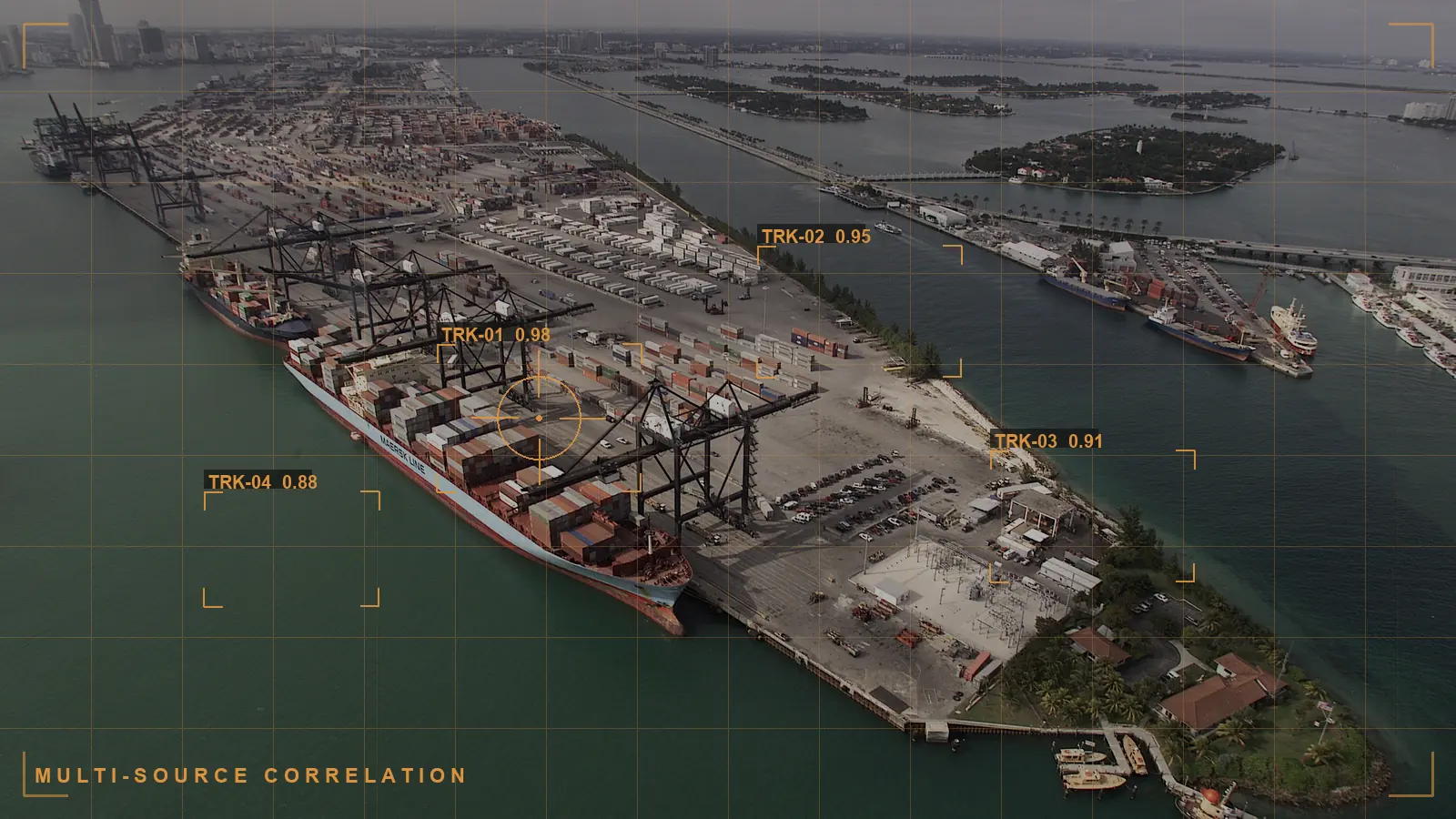
Cross-INT correlation is the process of determining when records from different intelligence disciplines - SIGINT, GEOINT, HUMINT, OSINT - refer to the same real-world entity or track, then linking them into one assessed, provenance-bearing object an analyst can trust.
Cross-INT correlation is the process of determining when records from different intelligence disciplines - SIGINT, GEOINT, HUMINT, OSINT - refer to the same real-world entity or track, then linking them into one assessed, provenance-bearing object an analyst can trust.
This is the technical companion to the pillar What Is Multi-INT Fusion?. The pillar explains what fusion is and why it matters; this page explains how correlation actually works under the hood.
Different disciplines describe the same object in incompatible ways. A SIGINT emitter, a GEOINT location, a HUMINT name, and an OSINT handle may all point to one person or platform, but nothing in the raw records says so. The Government Accountability Office has documented that combining data across these domains remains difficult: analysts often perform "swivel-chair" integration by hand across separate systems, and environments are frequently federated rather than built on a single repository, with classification boundaries adding friction (GAO-25-106454). Correlation is the step that turns many partial descriptions into one defensible assessment - the basis of the all-source intelligence product that doctrine expects (JP 2-0).
Cross-source entity alignment is the decision that two records from different sources describe the same entity. It compares identifiers, attributes, time, and location across disciplines and resolves matches, near-matches, and conflicts. NEXUS gives each source a common semantic representation so attributes can be compared on equal terms; HALO then expresses the resolved entities and their relationships as a graph, so an alignment is a visible link rather than a hidden inference.
Co-display puts multiple sources on one screen and leaves the correlation to the analyst's eye. An assessed (correlated) track is a single object the system has judged to be one real-world entity across sources, carrying the evidence and the confidence behind that judgment. Co-display shows data together; an assessed track asserts, with traceability, that the data is about the same thing.
When entities, observations, and relationships live in a graph, reasoning becomes a traversal: connect an emitter to a location to a platform to an intent across the find-fix-track-target-engage-assess sequence. Graph-based reasoning lets an analyst follow and test each link rather than accept an opaque score, and it keeps every inference tied to the source observations underneath it.
Every correlation in HALO records which source records were linked, by which logic, and when. An analyst can open a correlated track and see why two observations were joined, and a reviewer can audit or reverse it. Because ORCUS GraphRAG keeps these government-owned repositories interoperable across existing systems of record - consistent with CDAO's Open DAGIR model of government-owned, interoperable repositories for combining multi-source data (Open DAGIR Fact Sheet) - provenance survives across sources instead of being lost at each hand-off.
| Dimension | Co-display | Assessed (correlated) track |
|---|---|---|
| What it is | Sources shown together on one view | One object judged to be a single real-world entity |
| Who correlates | The analyst, by eye | The platform, with analyst review |
| Confidence | Implicit | Explicit and recorded |
| Provenance | Per source, not linked | Linked across sources, auditable |
| Reasoning | Manual | Graph traversal across find-fix-track-target-engage-assess |
| Failure mode | Missed or double-counted entities | Surfaced conflicts and near-matches |
Torch.AI builds this correlation as government-owned reasoning infrastructure that complements existing systems of record rather than replacing them: NEXUS makes each source meaningful, HALO makes the relationships understandable and traceable, and ORCUS keeps the underlying data available and interoperable.
Cross-source entity alignment is the decision that two records from different sources describe the same entity. It compares identifiers, attributes, time, and location across disciplines and resolves matches, near-matches, and conflicts. NEXUS gives each source a common semantic representation, and HALO expresses the resolved entities and relationships as a graph.
Co-display puts multiple sources on one screen and leaves correlation to the analyst's eye. An assessed track is a single object the system has judged to be one real-world entity across sources, carrying the evidence and confidence behind that judgment.
With entities, observations, and relationships in a graph, reasoning becomes a traversal: connect an emitter to a location to a platform to an intent across the find-fix-track-target-engage-assess sequence, with every inference tied to its source observations.
Every correlation in HALO records which source records were linked, by which logic, and when, so an analyst can see why two observations were joined and a reviewer can audit or reverse it. ORCUS GraphRAG keeps government-owned repositories interoperable so provenance survives across sources.


SHARE