Learn

Detectable intelligence is what a sensor or collection source can directly observe; deducible intelligence is the understanding you infer by connecting, correlating, and reasoning over many separate observations.
Last updated: October 26, 2026
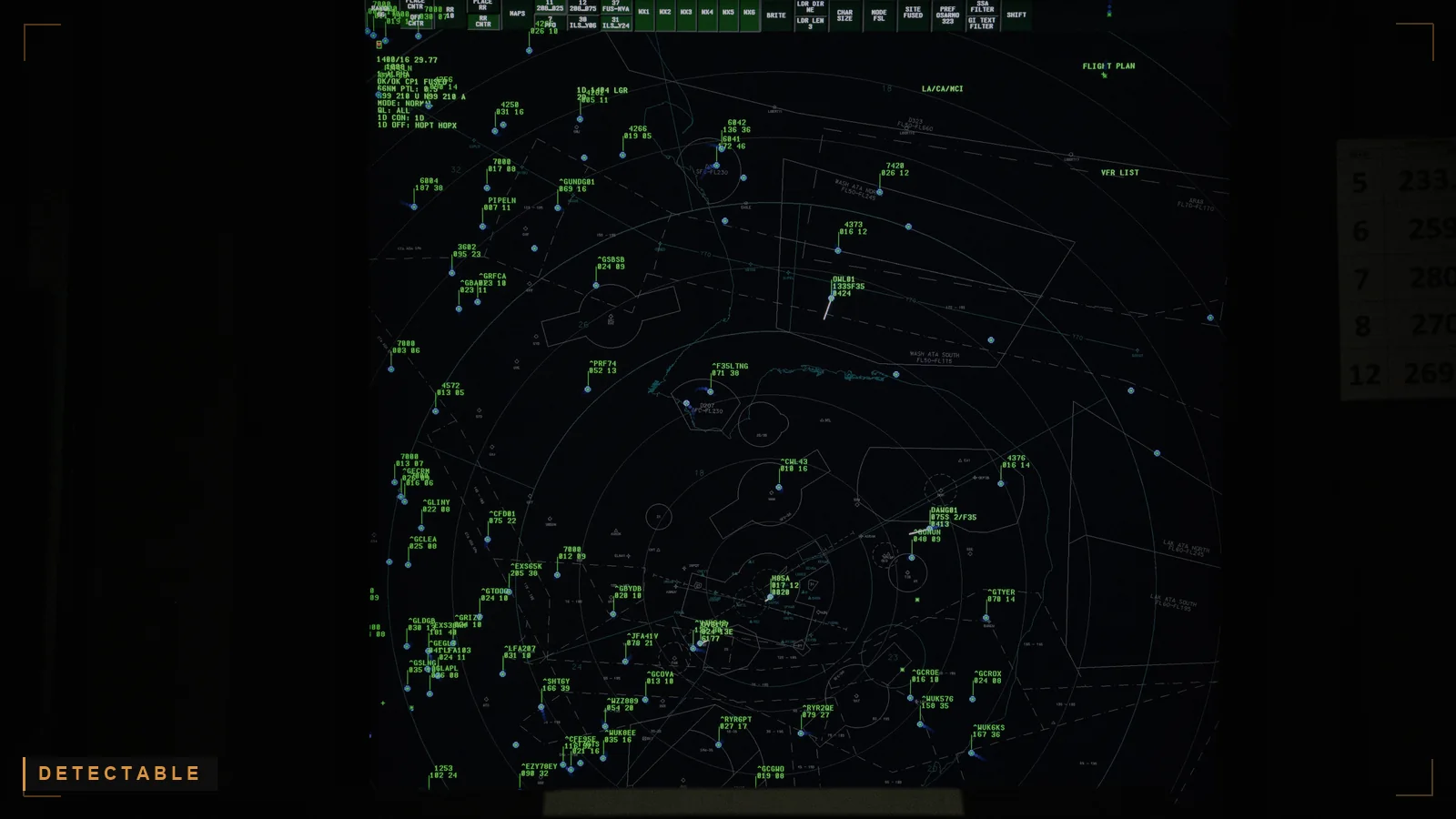
Why it matters to your mission. A sensor can tell you that a vessel is at a pier, that a transmission occurred, that a payment cleared. None of those observations, on their own, tells you what is about to happen. The intelligence value is almost never in the single observation. It is in what you can deduce once dozens of observations from different sources are matched to the same entity and reasoned over together. Detection finds the dots. Deduction connects them. The side that connects them faster, and can show its work, decides first.
Detectable intelligence is what a sensor or collection source can directly observe; deducible intelligence is the understanding you infer by connecting, correlating, and reasoning over many separate observations. The distinction maps directly onto doctrine: detection produces information, and deduction is the analysis that turns information into intelligence.
Joint doctrine draws the same line. In Joint Publication 2-0, Joint Intelligence, the Joint Chiefs of Staff define information as "data that have been collected but not further developed through analysis, interpretation, or correlation with other data and intelligence," and state plainly that "the application of analysis transforms information into intelligence." Detectable is the collected observation. Deducible is what analysis makes of it. They are not the same thing, and the doctrine is explicit that they "have different connotations, applicability, and credibility."
Key takeaways
Detectable intelligence is the raw product of collection. A radar return, a signals intercept, a line in a manifest, a geolocated photograph - each is something a source directly observed and reported. It is concrete, it is attributable to a specific sensor at a specific time, and taken alone it usually answers very little. Doctrine would call this information: collected, but "not further developed through analysis, interpretation, or correlation."
Deducible intelligence is what you can conclude once those observations are brought together and reasoned over. No sensor observes "this shell company is a front" or "these two vessels are coordinating." Those are deductions - inferences that exist only in the relationships between many detections. JP 2-0 describes the work that produces them as "the integration, evaluation, analysis, and interpretation of information from single or multiple sources into finished intelligence."
The gap between the two is reasoning, and it is also where the mission is won or lost. A detection you never connect is a dot on a screen. A deduction you cannot trace back to its detections is a guess you cannot defend in a briefing. The discipline is holding both at once: reaching the inference and keeping the line back to every observation that supports it.
| Dimension | Detectable intelligence | Deducible intelligence |
|---|---|---|
| What it is | A direct observation from a single source | An inference across many observations |
| Doctrinal layer | Information (collected, not yet analyzed) | Intelligence (information transformed by analysis) |
| Where it comes from | A sensor, intercept, record, or transaction | Correlation, entity resolution, and reasoning over detections |
| What it answers | "What did this source observe?" | "What does all of it mean together, and how do I know?" |
| Failure mode | A dot no one connects | A conclusion no one can trace back to its sources |
| What produces it | Collection | A reasoning layer over the collected data |

Detection finds the dots; deduction connects them
Joint Publication 2-0 draws the line: information is data collected but not yet analyzed, and analysis transforms information into intelligence. Detectable is the observation; deducible is what analysis makes of it.
The meaning lives in the relationships between observations, which no single sensor reports. You cannot deduce what you have not first matched, and a deduction you cannot trace is a guess you cannot defend.
Collection has rarely been the binding constraint in a modern mission. Sensors, feeds, and records already produce far more detectable material than any team can read. The scarce thing is the deduction: the correlation that turns thousands of observations into one picture of what an adversary is doing and what they are likely to do next.
That is because a single detection is almost always ambiguous. A ship at a pier is routine until you connect it to a fuel transaction, a crew movement, and a pattern of past sailings - at which point it becomes an indication. The meaning does not live in any one of those observations. It lives in the relationships between them, and relationships are exactly what no single sensor reports. Deduction is the act of making those relationships explicit.
This is why adding more collection seldom closes the gap on its own. More detections without more deduction just deepen the pile. The decisive investment is in the layer that reasons across what is already detectable - the layer that turns information into intelligence in the doctrinal sense, at the speed the mission needs.
Detection is a sensor problem with a clear output: point an instrument at the world and record what it observes. Deduction is a reasoning problem, and it is harder for reasons that compound:
None of these are collection problems. They are reasoning problems, which is why more sensors do not solve them.
The detectable/deducible distinction is not a new framework laid over doctrine - it is a plain-language reading of the intelligence process itself. Joint doctrine organizes intelligence operations into interrelated categories including collection, processing and exploitation, and analysis and production. Detection sits on the collection side: it is what the sources observe. Deduction sits on the analysis-and-production side, which JP 2-0 defines as "the integration, evaluation, analysis, and interpretation of information from single or multiple sources into finished intelligence."
The doctrine is explicit that these are different in kind. Information is "data that have been collected but not further developed," and "the application of analysis transforms information into intelligence." Detection gives you the first; only deduction gives you the second. A program that keeps investing in collection while treating analysis as a manual afterthought is optimizing the step that was never the bottleneck.
This is also why deduction depends on multi-INT fusion. JP 2-0 directs analysts at fusion centers to "use information available from multiple sources, integrate it, and provide the decisionmaker with a clear picture." Fusion is the mechanism of deduction: it is how observations from separate collection disciplines become one correlated inference rather than several disconnected detections.
Not, usually, from the sensor. Detection failures happen, but the more common and more dangerous failures live in the deducible layer, where observations are connected incorrectly - or never connected at all:
The common thread is that these are reasoning errors, not collection errors. They are precisely the failures a traceable reasoning layer is built to reduce: resolving entities correctly, fusing relationships explicitly, and keeping every deduction tied to the observations that support it. See also cross-INT correlation for how disciplined correlation guards against them.
Torch.AI builds government-owned reasoning infrastructure that lives in the deducible layer: it turns fragmented, multi-source detections into coherent understanding at machine speed, while keeping every inference traceable back to the observations behind it. It does not replace the sensors or the systems that produce detectable data. It reasons across them. Because the reasoning layer runs as a system of reasoning on top of existing systems of record, the authoritative sources stay intact and the customer keeps control of the layer where detections become deductions. You can see how this is packaged as a capability on the Torch.AI software page.
Three public products carry the relevant roles. ORCUS is the data-availability layer that makes the detectable inputs reliably available to the reasoning layer and preserves their provenance end to end - you cannot deduce what you cannot first reach. NEXUS makes those inputs meaningful, turning unstructured, multilingual detections into a semantic representation that can be searched, correlated, and reasoned over. HALO carries the deduction itself: it resolves entities across sources and fuses them into a graph of relationships an analyst can trust and trace, because you cannot deduce what you have not first matched.
This approach is built for the distinction this page describes: resolve the entity before you reason about it, make the relationships explicit, reach the deduction at machine speed, and keep every conclusion tied to the detections that support it. For evaluators, see the software page or request a technical walkthrough and we will run it against a sample of your multi-source data, with each deduction traced back to its detections.
The distinction above explains why deduction is the hard part; the checklist below is what to require from the layer that produces it. Use it as the backbone of an evaluation you can score against:
Evaluating a capability? Bring these seven requirements to a scoping call and we will walk each one against your environment: request a technical walkthrough.
Detectable intelligence is what a sensor or collection source directly observes - a single, concrete observation. Deducible intelligence is the understanding you infer by connecting, correlating, and reasoning over many such observations. In doctrinal terms, detection produces information and deduction is the analysis that transforms information into intelligence.
Because a single detection is almost always ambiguous. The meaning lives in the relationships between observations, which no single sensor reports. More collection without more deduction just deepens the pile; the decisive work is reasoning across what is already detectable.
Detection is a sensor problem with a clear output. Deduction is a reasoning problem: you cannot deduce what you have not first matched, the observations are fragmented and multi-source, correlation is not causation, and every inference must stay traceable, all at machine speed.
It is a plain reading of the intelligence process. Detection sits on the collection side; deduction sits on analysis and production, which Joint Publication 2-0 defines as the integration, evaluation, analysis, and interpretation of information from single or multiple sources into finished intelligence. Fusion is the mechanism of deduction.
Usually from the deducible layer, not the sensor: missed connections where the dots were present but never correlated, false matches where two records are wrongly fused, repetition mistaken for corroboration, and untraceable inferences that cannot be defended. These are reasoning errors, not collection errors.
No. Deduction depends on knowing that records in separate systems describe the same real-world entity. You cannot deduce what you have not first matched, which is why entity resolution and multi-INT fusion are prerequisites for the deducible layer.


Describe the problem.
Define the constraints. We will structure the session.
No demo.
No slide deck.
Real work.
Describe the decision your detectable intelligence should support. We will scope a session around your sources. No sensor pitch. Your detections. Real work.