

Learn
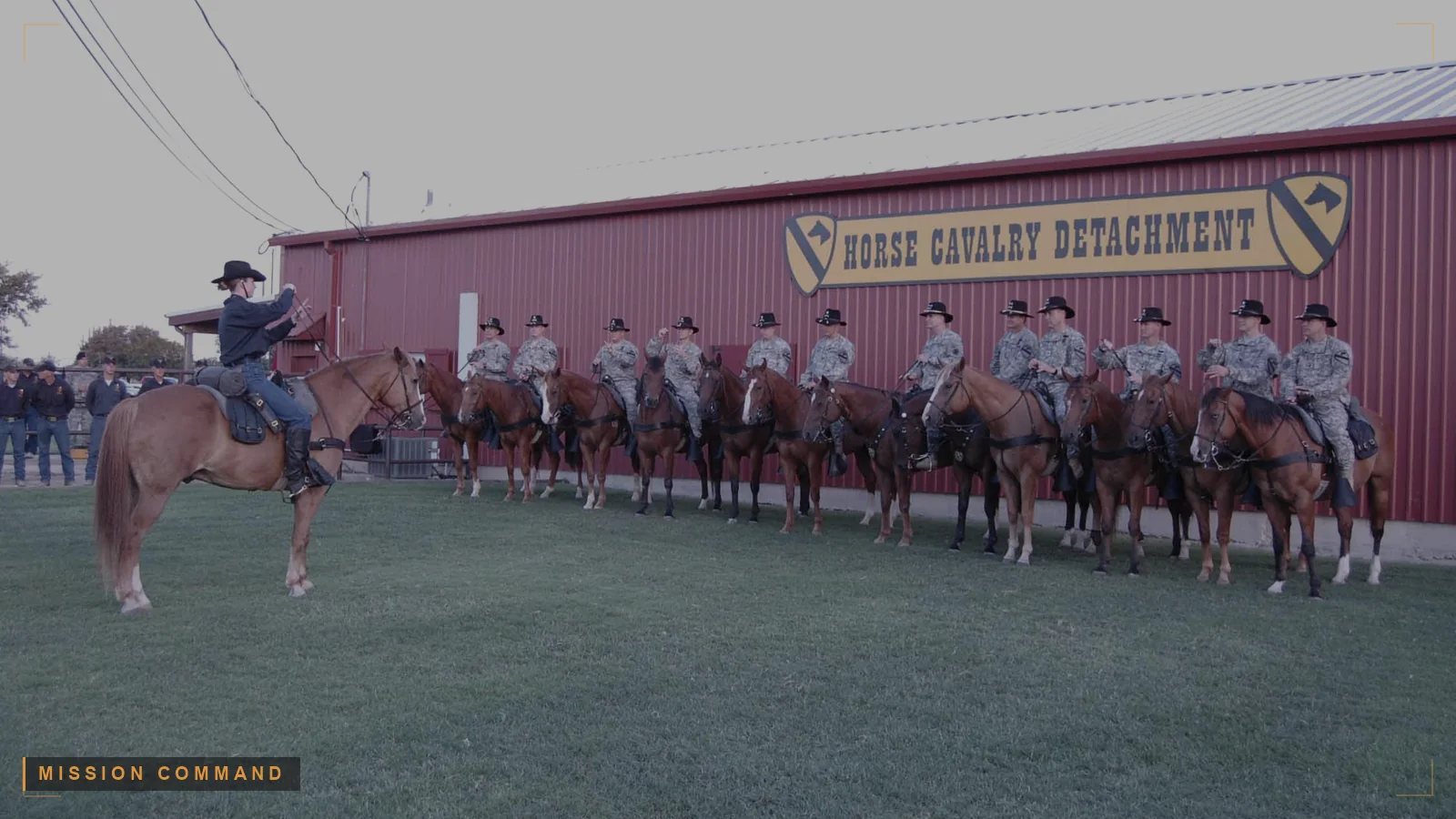
Mission command is the United States Army's approach to command and control that empowers subordinate decision making and decentralized execution appropriate to the situation, guided by seven principles set out in Army Doctrine Publication (ADP) 6-0.
Mission command is the United States Army's approach to command and control that empowers subordinate decision making and decentralized execution appropriate to the situation, guided by seven principles set out in Army Doctrine Publication (ADP) 6-0. It is sometimes called mission-type command or the mission command philosophy. The seven principles are competence, mutual trust, shared understanding, commander's intent, mission orders, disciplined initiative, and risk acceptance.
Last updated: November 20, 2026. Grounded in the current edition of ADP 6-0, dated 07 July 2026, which supersedes the 2019 edition most references still cite.
Why it matters to your mission. No plan survives contact intact, and no single commander can see enough or decide fast enough to run a fight from the top. Mission command tells subordinates the purpose and the end state, trusts them to find the way, and lets them act when the plan stops fitting. It only works if everyone shares the same understanding of the situation and the commander's intent. Fragmented data erodes exactly that.
By the numbers. ADP 6-0 lists 7 principles of mission command, defines commander's intent through 3 components (purpose, key tasks, end state), and asks that intent be understood two echelons down. Writing for West Point's Modern War Institute, retired General James Mingus, a former Vice Chief of Staff of the Army, and Major Zak Daker estimate that leaders have historically spent "perhaps as much as 80 percent" of their time on data and information processing rather than higher-order thinking (Modern War Institute, "Ascend the Cognitive Hierarchy", 2026).
The Army defines it in one sentence: "Mission command is the Army's approach to command and control that empowers subordinate decision making and decentralized execution appropriate to the situation" (ADP 6-0, Command and Control, July 2026, para. 1-37). The reasoning behind it follows in the same paragraph: war is chaotic and uncertain, "no single person is ever sufficiently informed to make every important decision," and no one person can keep up with the volume of decisions combat demands.
Three phrases carry the weight:
The idea is older than the term. ADP 6-0 holds up Lieutenant General Ulysses S. Grant's April 1864 letter to Major General William T. Sherman as a model of intent: "I do not propose to lay down for you a plan of campaign, but simply to lay down the work it is desirable to have done and leave you free to execute it in your own way." The Army codified the term and its principles in the 2003 edition of FM 6-0.
ADP 6-0 states that "successful mission command is enabled by the principles of" competence, mutual trust, shared understanding, commander's intent, mission orders, disciplined initiative, and risk acceptance (para. 1-49). The list is the same in the 2019 and 2026 editions. The principles are interdependent: trust rests on competence, initiative rests on intent and shared understanding, and none of it works without risk acceptance.
| Principle | What ADP 6-0 (2026) says | What it demands in practice |
|---|---|---|
| Competence | An organization's ability to operate using mission command "relates directly to the competence of its Soldiers" (para. 1-50) | Training, education, and experience that let commanders trust subordinates at acceptable risk |
| Mutual trust | "The shared confidence between commanders, subordinates, and partners that they can be relied on and are competent in performing their assigned tasks" (para. 1-53) | Trust that flows both ways and is built through shared experience |
| Shared understanding | "Effective decentralized execution is not possible without shared understanding" (para. 1-58) | A common picture of the operational environment, pushed to the lowest possible level |
| Commander's intent | "A clear and concise expression of the purpose of an operation and the desired objectives and military end state" (para. 1-64) | A short statement subordinates two echelons down can remember and act on |
| Mission orders | "Directives that emphasize to subordinates the results to be attained, not how they are to achieve them" (para. 1-71) | Orders that state mission, intent, and tasks, and leave the how to the subordinate |
| Disciplined initiative | The duty of subordinates "to exercise initiative within the constraints of the commander's intent to achieve the desired end state" (para. 1-77) | Following the plan until it no longer fits, then acting on the intent |
| Risk acceptance | "Reasonably estimating and intentionally accepting risk is not gambling" (para. 1-87) | Accepting prudent risk and underwriting subordinates' good-faith mistakes |
Two principles bear most directly on information and technology. Shared understanding depends on the flow of information "to the lowest possible level" (para. 1-58), and it starts with doctrine itself: ADP 6-0 says Army professionals understand "the most current Army doctrine to ensure a minimum level of shared understanding" (para. 1-59). Disciplined initiative is what subordinates must exercise "when communication with higher echelons is intermittent or decisions must be made immediately" (para. 1-78).
Commander's intent has three parts: the purpose of the operation, the key tasks, and the conditions that define the end state (ADP 6-0, para. 1-66). Each does specific work:
Intent nests. "Each commander's intent nests within the commander's intent two levels up" (para. 1-64), and it must be clearly understood by commanders and staffs two echelons lower (para. 1-65). Commanders write it personally and, when possible, deliver it face to face so subordinates can ask questions on the spot (para. 1-69).
Consider an illustrative case. A company is ordered to seize a bridge so a battalion can cross by dawn. The bridge is destroyed before the company arrives, and the radio link to battalion is down. A subordinate who knows only the task is stuck. One who knows the purpose and end state can find another crossing, secure it, and report when communications return. That is disciplined initiative within intent, and it only works if the company commander also has an accurate picture of the terrain and the enemy when the plan breaks.
Command and control is the function; mission command is the Army's approach to performing it. ADP 6-0 adopts the joint definition of command and control: "the exercise of authority and direction by a properly designated commander over assigned and attached forces in the accomplishment of the mission" (para. 1-10, citing JP 1, Volume 2). Every military force exercises command and control. Mission command is the Army's stated choice about how: decentralized, intent-driven, and trusting.
Between 2012 and 2019, Army doctrine used "mission command" for the warfighting function, the system, and the philosophy at once, which the current doctrine says "created ambiguity." Today the pieces have separate names:
Command is "more art than science" because it rests on judgment, while control is "more science than art because it relies on objectivity, empirical methods, and data driven analysis" (paras. 1-18, 1-25). Data and AI belong on the control side; command remains a human act.
Detailed command is the opposite end of the command and control spectrum from mission command: it centralizes information and decision-making authority and achieves unity of effort through detailed, prescriptive orders and strict obedience. The 2003 edition of FM 6-0, the manual that first codified mission command, laid out the two as "the theoretical extremes of a C2 spectrum" and noted that "in practice no commander relies on purely detailed or purely mission command techniques" (FM 6-0, 2003, Chapter 1[2], paras. 1-61 to 1-65).
One line from that manual reads differently in the age of AI. A detailed-command commander seeks order "by creating a powerful, efficient C2 system able to process huge amounts of information, and by attempting to reduce nearly all unknowns to certainty" (para. 1-65). In our reading, that is also what a centralized, all-seeing AI dashboard promises. The model fails when communications break and the situation outruns the plan.
Current doctrine handles the same idea as levels of control: give subordinates "the greatest freedom of action equal to the level of acceptable risk in a particular situation" and tighten control only where close synchronization demands it (ADP 6-0, 2026, paras. 1-47 to 1-48).
Detailed command vs. mission command (Torch.AI synthesis of FM 6-0 (2003) and ADP 6-0 (2026); the last row is interpretive)
| Dimension | Detailed command | Mission command |
|---|---|---|
| Underlying belief | Success comes from imposing order and certainty | War is chaotic and uncertain; no plan accounts for every possibility |
| Decision authority | Centralized at higher echelons | Delegated to subordinates, appropriate to the situation |
| Orders | Detailed, explicit, prescriptive | Mission orders: results to attain, not how to attain them |
| Information flow | Vertical: information up, orders down | Shared understanding pushed to the lowest possible level |
| Subordinate role | Strict obedience, minimal initiative | Disciplined initiative within commander's intent |
| When communications fail | Execution stalls without new orders | Subordinates act on intent and report when able |
| Role of technology (interpretive) | Collect everything centrally so the top can decide | Push understanding and intent outward so the edge can decide |

Detailed command pulls up; mission command pushes out
The 2003 FM 6-0 framed detailed command and mission command as the two extremes of a command and control spectrum. In practice no commander relies on purely one or the other.
Technology that pulls every decision to the top recreates detailed command. Decision support built for mission command raises the shared picture everywhere and leaves the decision with the human.
The Department of the Army published a new ADP 6-0, retitled simply Command and Control, on 07 July 2026. It supersedes the 31 July 2019 edition, Mission Command: Command and Control of Army Forces. The definition and the seven principles carry over. What changed is the context around them, much of it about data and AI. The edition:
The doctrine states the demand itself. ADP 6-0 says that "current decision optimization efforts are actively integrating artificial intelligence and advanced analytics to facilitate faster, more informed decision making," combining "human and machine capabilities" to achieve operational advantage (para. 1-21). It also sets the limits. Commanders must "understand both the capabilities and limitations of these tools," because "distortions in training artificial intelligence models can cause biases in the recommendations presented" (para. 2-27). And it is explicit that analytics "are no substitute for the leader's judgment" (note in Chapter 3, on data analytics).
The same need appears at the joint level. The U.S. Government Accountability Office found that inside its operations centers, DoD "largely relies on inefficient 'swivel chair' data collection and assessment processes," with data arriving from multiple systems on multiple displays (GAO-25-106454[3], 2025). Shared understanding is still being assembled by hand.
A decision aid that still cites the 2019 edition is now citing superseded doctrine, so doctrine alignment has to be versioned and auditable.
Yes, if it strengthens the principles rather than routing around them. The doctrine draws the line itself: the command and control system "can be enhanced by technology (such as artificial intelligence and machine learning)," but it "begins with people," and "no amount of technology can reduce the importance of the human dimension" (ADP 6-0, para. 4-13). AI belongs on the science-of-control side, compressing the work of turning data into understanding, so that commanders and subordinates have more time for the art of command.
The cognitive hierarchy in ADP 6-0 shows where. Processing turns data into information, analysis turns information into knowledge, and commanders apply judgment to turn knowledge into understanding (para. 2-14; see the DIKW pyramid). The Modern War Institute authors cited above argue for inverting the historical split, automating lower-tier cognitive tasks so that most human effort goes to understanding and visualization. Machine speed is useful in the bottom layers. Judgment stays at the top.
Mapped principle by principle, decision support can reinforce mission command in specific ways. (This mapping is Torch.AI's interpretation, not doctrine.)
The failure mode is the detailed-command trap. A system that pulls every data stream to the top can feel like control, but it starves subordinates of the understanding they need when the link drops. Decision support built for mission command does the reverse and leaves the decision with the human who owns it. That is how AI contributes to decision advantage without eroding the trust mission command depends on.
Use this checklist in an evaluation.
Torch.AI does not issue orders or make command decisions, and nothing on this page suggests a machine should. Torch.AI builds government-owned reasoning infrastructure for the science-of-control side of the command and control system: turning fragmented, multi-source data into coherent understanding at machine speed, traceable to its sources and to doctrine, and delivered to the people who act on it.
The pieces map to the principles that depend most on information. ORCUS is the data-availability layer: it connects to mission data where it lives and preserves provenance, so the picture can be traced back to its sources. NEXUS turns doctrine and reporting into structured, retrievable knowledge domains, so the current edition of the doctrine is something a system can apply, not a PDF on a shared drive. HALO fuses entities and relationships across sources into one coherent picture, the raw material of shared understanding. A deterministic decision layer evaluates a situation against encoded doctrine and returns supported, conditional, or abstain, with a citation to the source paragraph and no probabilistic model in the critical path (see deterministic decision support for defense). A language model can help a staff find and frame the relevant doctrine, but it stays out of the verdict. You can see how this is packaged on the Torch.AI software page.
This is systems of record versus systems of reason applied to command and control: the systems of record stay in place, and the reasoning layer works on top of them. Whether a given deployment is government-owned (GOTS) or commercial (COTS) depends on what the customer installs and purchases; when ownership matters to the mission, the government-owned option lets the customer keep control of the doctrine encoding, the rules, and the audit trail.
If shared understanding is being assembled by hand across systems, or your decision aids cannot show which doctrine they applied, request a technical walkthrough. We will run the checklist above against a slice of your own data and doctrine.
ADP 6-0 defines mission command as "the Army's approach to command and control that empowers subordinate decision making and decentralized execution appropriate to the situation." Commanders state the purpose and end state; subordinates decide how.
Competence, mutual trust, shared understanding, commander's intent, mission orders, disciplined initiative, and risk acceptance. The list is unchanged between the 2019 and July 2026 editions of ADP 6-0.
The purpose of the operation, the key tasks the force as a whole must perform, and the conditions that define the end state. It must be understood two echelons down.
Command and control is the function: the exercise of authority and direction by a designated commander over assigned forces. Mission command is the Army's approach to performing it.
The opposite end of the command and control spectrum from mission command. As described in the 2003 FM 6-0, it centralizes decision-making authority and relies on detailed orders and strict obedience, which makes it brittle when communications fail.
The July 2026 edition keeps the definition and the seven principles, replaces command posts with dispersed command and control nodes, incorporates multidomain operations, and adds data analytics and data literacy as defined terms.
Yes. ADP 6-0 says the command and control system can be enhanced by artificial intelligence but begins with people. AI helps when it speeds the work of turning data into shared understanding and stays traceable to doctrine and sources, while the commander keeps the decision.
The duty of subordinates to exercise initiative within the constraints of the commander's intent: follow the plan until it no longer fits, then act to achieve the intent.


Describe the problem.
Define the constraints. We will structure the session.
No demo.
No slide deck.
Real work.
Describe where shared understanding breaks down. We will structure the session around your data and doctrine. No demo. Your doctrine and data. Real work.