

Learn
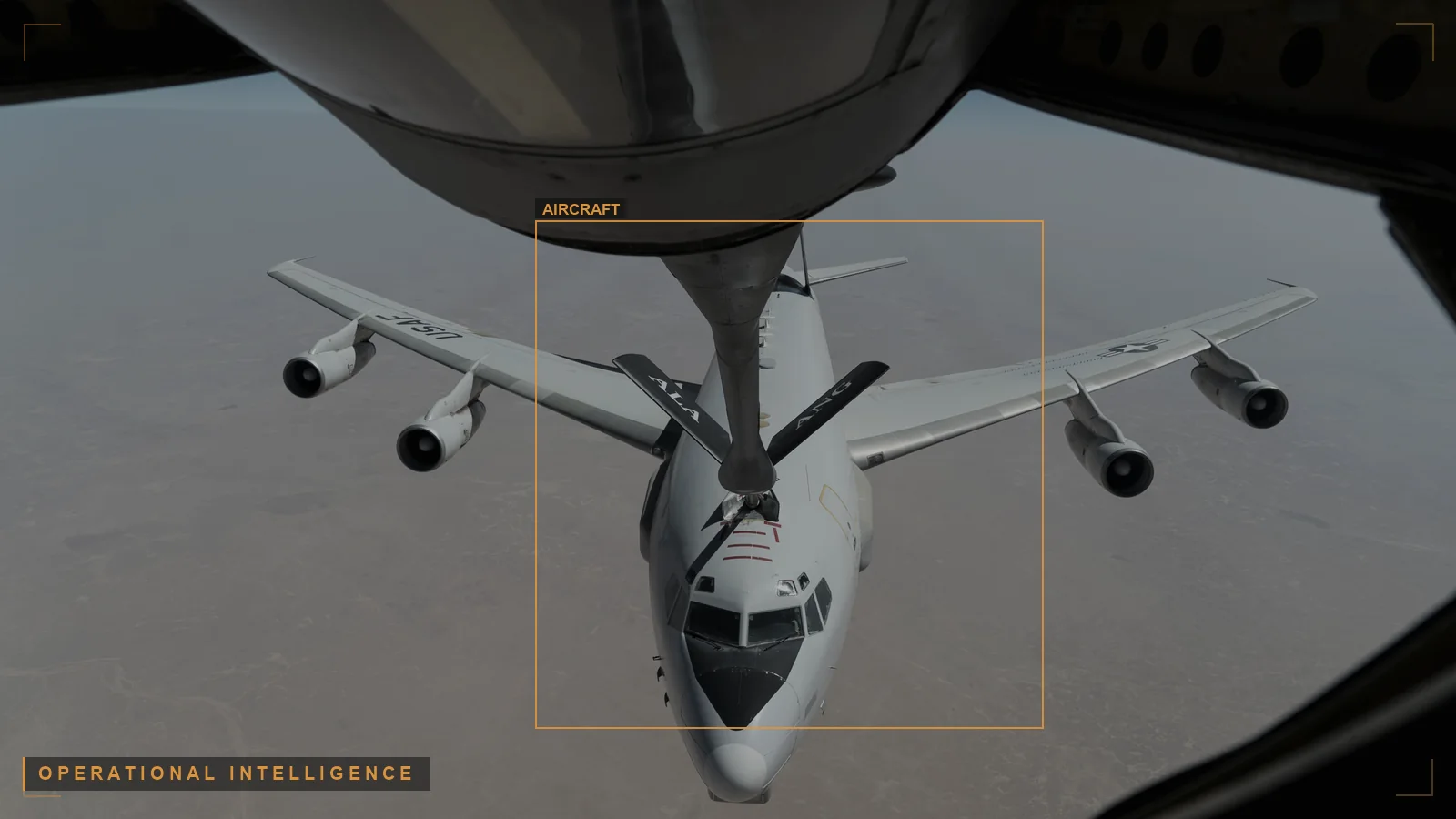
Operational intelligence is intelligence required for planning and conducting campaigns and major operations to accomplish strategic objectives within theaters or areas of operations, the middle level of military intelligence between strategic and tactical intelligence.
Last updated: November 23, 2026
Why it matters to your mission. Battles are won with tactical intelligence and wars are shaped by strategic intelligence, but campaigns live or die in the middle. A combatant commander deciding where to mass, when to commit a reserve, or which adversary capability to dismantle first is not asking what is over the next ridge or what a rival government intends over the next decade. They are asking when, where, and in what strength the adversary can act across an entire theater. Answering that means pulling reporting from every intelligence discipline and every component into one picture fast enough to plan against, which is why operational intelligence has become as much a data problem as an analytic one.
Operational intelligence is intelligence required for planning and conducting campaigns and major operations to accomplish strategic objectives within theaters or areas of operations, the middle level of military intelligence between strategic and tactical intelligence. That wording follows joint doctrine: Joint Publication 2-0 defines operational intelligence as "intelligence required for planning and conducting campaigns and major operations to accomplish strategic objectives within theaters or areas of operations" (JP 2-0, Chapter II). It is also called operational-level intelligence and is sometimes abbreviated OPINTEL.
The term has a second, unrelated meaning in commercial IT, where "operational intelligence" describes real-time analytics over business event data. This page is about the defense meaning; the business sense is covered briefly in the related-terms section.
<aside class="stat-callout">11 and 18. Joint data integration has to span DoD's 11 unified combatant commands, which the U.S. Government Accountability Office describes as "DOD's operational commanders," and the 18 organizations of the Intelligence Community. Source: GAO-25-106454, Defense Command and Control (2025).</aside>
Key takeaways
Joint doctrine pairs each level of warfare with a level of intelligence. JP 2-0 states that "all levels of war have corresponding levels of intelligence operations," and that the strategic, operational, and tactical construct helps commanders and their intelligence directorates (J-2s) visualize how intelligence flows from one level to the next (JP 2-0, 2007 edition, Chapter I[2]). The levels are defined by the decision they support, not by the sensor, the discipline, or the classification of the source.
| Dimension | Strategic intelligence | Operational intelligence | Tactical intelligence |
|---|---|---|---|
| Doctrinal definition | Intelligence required for the formation of policy and military plans at national and international levels | Intelligence required for planning and conducting campaigns and major operations to accomplish strategic objectives within theaters or areas of operations | Intelligence required for the planning and conduct of tactical operations |
| Level of warfare it supports | Strategic level: national and multinational guidance and objectives | Operational level: campaigns and major operations | Tactical level: battles and engagements |
| Primary consumers | Senior military and civilian leaders, the President, Congress, Secretary of Defense, combatant commanders | Combatant commanders, subordinate joint force commanders, and component commanders | Commanders, planners, and operators at the unit level |
| The question it answers | What does the adversary intend, and what forces and policies do we need? | When, where, and in what strength can the adversary stage campaigns and major operations in this theater? | What is the threat to this force, in this place, right now? |
| Typical products (illustrative) | Assessments that inform national strategy, force structure, and weapon-system requirements | Adversary centers of gravity, campaign-level courses of action, theater order of battle, warning of major operations | Threat and target status reporting, obstacle intelligence, combat intelligence |
The strategic and tactical definitions above are taken from the current DoD Dictionary of Military and Associated Terms, both sourced to JP 2-0. The consumer and focus rows follow the levels-of-intelligence figure in JP 2-0 (2007), Figure I-8. One detail worth knowing: the June 2025 DoD Dictionary carries entries for strategic intelligence, tactical intelligence, and the operational level of warfare, but no standalone entry for operational intelligence. The term survives in its definition of a joint intelligence operations center, described as "an interdependent, operational intelligence organization." The operational definition on this page therefore comes from JP 2-0 itself.
The boundaries blur in practice. A single report on an adversary air defense battery can be tactical to the strike package, operational to the campaign planner deciding where to open an air corridor, and strategic to leaders weighing escalation. JP 2-0 makes the same point: whether an objective is strategic, operational, or tactical often becomes clear only in post-mission analysis.

Intelligence levels follow the decision they support
Each level of warfare has a matching level of intelligence. Operational intelligence serves the commanders who own a theater and the campaigns in it.
The definition follows JP 2-0 (1995 and 2007). The current DoD Dictionary has no standalone entry for operational intelligence.
Operational intelligence is produced for the commanders who own a theater and the campaigns in it. JP 2-0 (2007) states that it "is primarily used by CCDRs and subordinate JFCs and their component commanders" (combatant commanders and joint force commanders) and that it "focuses on adversary military capabilities and intentions." It helps those commanders "keep abreast of events within their area of interest" and "determine when, where, and in what strength the adversary might stage and conduct campaigns and major operations."
The organizations that produce it sit at the same level. The DoD Dictionary defines a joint intelligence operations center (JIOC) as "an interdependent, operational intelligence organization at the Department of Defense, combatant command, or joint task force (if established) level that is integrated with national intelligence centers and capable of accessing all sources of intelligence impacting military operations planning, execution, and assessment." Two phrases carry the weight: "integrated with national intelligence centers" and "all sources of intelligence." Operational intelligence is all-source by design, which ties it directly to all-source intelligence and multi-INT fusion.
Below the joint level, each service component runs its own operational intelligence effort for its domain, then feeds the joint picture. The joint force commander needs those component views to align, which is where most of the friction lives.
Consider an illustrative theater campaign. A joint force commander must decide how to sequence a campaign against an adversary that can reinforce a contested region by sea, air, and rail.
Tactical intelligence will tell each unit what is in front of it. Strategic intelligence has already framed the adversary's national objectives and force structure. The operational question sits between: how fast can the adversary move forces into the region, along which routes, under what logistics limits, and which capability, if disrupted, unravels that reinforcement plan?
Answering it means combining very different inputs. Imagery shows rail yards and port activity. Signals reporting shows changes in command networks. Open-source reporting shows commercial shipping diversions and civil transport notices. Human reporting describes unit readiness. Logistics estimates bound what is feasible. Assembled into one picture, those fragments become an assessment the commander can plan against: the adversary's likely courses of action, the timeline for each, the order of battle that would execute them, and the centers of gravity worth targeting. That assessment then drives target system analysis and sets the watch conditions for indications and warning.
The failure modes are just as clear. If the imagery, signals, and open-source pieces are never correlated, the reinforcement timeline is guessed rather than assessed. If the same rail unit appears under three designators across three systems, the order of battle is inflated and the planner over-allocates against a phantom. The campaign plan inherits every gap.
Actionable intelligence is intelligence specific, timely, and reliable enough that a commander can make a decision or take an action on it. It is a widely used phrase, not a doctrinal term: the DoD Dictionary does not define it. The closest doctrinal anchor is JP 2-0 (2007), which states that joint force commanders "require and expect timely intelligence estimates that accurately identify adversary intentions, support offensive and/or defense operations, and predict adversary future COAs in sufficient detail as to be actionable."
JP 2-0 also sets the standard an intelligence product has to meet to be useful. It lists eight attributes of intelligence excellence: intelligence must be "anticipatory, timely, accurate, usable, complete, relevant, objective, and available." Read together, those attributes are a working test for actionability at the operational level:
A fifth test follows from the others, though doctrine does not list it as an attribute: a commander should be able to see why an assessment says what it says. An operational judgment that cannot be traced to its sources is hard to brief, hard to challenge, and hard to defend when it turns out to be wrong.
Operational intelligence is a data problem because the inputs that matter at the theater level are scattered across disciplines, components, partners, and networks that were never designed to line up. The Department of War has named the underlying need a priority, and independent oversight has documented the gap. In its 2025 review of command and control, GAO found that "maintaining information and decision advantage is one of DOD's top priorities," and that inside operations centers DoD "largely relies on inefficient 'swivel chair' data collection and assessment processes," in which data arrives from multiple systems and analysts "collect, assess, and package the data by manually entering and transferring them into yet another system" (GAO-25-106454[4]). The Combined Joint All-Domain Command and Control effort (CJADC2) exists in large part to replace that model with integrated data. GAO's own example is squarely operational: U.S. Central Command planners used to gather operational and logistics inputs separately and combine them "using documents and slide decks" to judge whether a course of action was feasible; once two data systems were integrated, planners could see potential logistics issues with a planned course of action immediately and adjust it.
Operational intelligence by the numbers
Three properties of operational data make this hard:
None of these is solved by a faster dashboard. They are solved by connecting the sources, resolving what they describe, and keeping the line back to each original report intact, so that the common operating picture a commander sees is one they can trust.
Several terms overlap with operational intelligence or share its name. The table separates them.
| Term | What it means | Relationship to operational intelligence |
|---|---|---|
| Operational intelligence (business IT) | Real-time analytics over business event and machine data, used to monitor and adjust operations as they happen | Same words, different discipline. It concerns an organization's own operations, not an adversary, and has no doctrinal basis |
| Operational threat intelligence (cybersecurity) | In cyber threat intelligence, the level describing specific adversary campaigns and their tactics, techniques, and procedures | Borrowed from the military levels but applied to network defense. Ordering and time horizons vary by vendor and do not map one-to-one to joint doctrine |
| Strategic intelligence | Intelligence for national policy and military plans | The level above. Operational intelligence translates strategic objectives into theater campaigns |
| Tactical intelligence | Intelligence for battles and engagements | The level below. Tactical reporting aggregates upward into operational assessments |
| All-source intelligence | Intelligence that integrates every available discipline | A method rather than a level. Operational intelligence is almost always all-source |
| Indications and warning (I&W) | Warning intelligence: activities that detect and report time-sensitive information on foreign developments that forewarn of hostile actions or intention (DoD Dictionary) | A function performed at every level. At the operational level it warns of adversary campaign preparations. See indications and warning |
| Decision advantage | Making better decisions faster than an adversary | The outcome operational intelligence serves. See decision advantage |
"Operational intelligence solutions" covers everything from business monitoring software to defense analytic platforms, so the label alone tells an evaluator little. For defense and intelligence use, the capability underneath has to meet the conditions above. Require:
Scoping an operational intelligence capability? Bring these eight requirements to a technical session and we will walk each one against your theater data and environment: request a technical walkthrough.
Torch.AI does not produce intelligence assessments; analysts and commanders do. What Torch.AI builds is the reasoning infrastructure underneath operational intelligence: the layer that connects fragmented, multi-source data, resolves what it describes, and keeps every element traceable, so analysts spend their hours on judgment instead of compilation.
Three products carry that work. ORCUS is the data-availability layer that connects to sources where they live and combines search results from separate datasets into one derived dataset without manual joins. NEXUS is the analytical layer: it extracts text and structure from unstructured reports and documents so they can be searched and correlated, supports semantic search across them, and organizes them into reusable knowledge domains, durable analytical building blocks that can serve more than one mission question. HALO makes relationships understandable: it builds and queries a mission knowledge graph, disambiguates duplicate entities, and fuses sources into a graph an analyst can traverse back to the original records. Together they turn scattered theater reporting into a connected picture that supports the operational questions on this page, from order of battle to centers of gravity, while the authoritative systems of record stay intact. See how this is packaged on the Torch.AI software page.
This is the distinction between systems of record and a system of reason. The intelligence holdings remain the record; the reasoning layer sits on top, making them work together. Ownership is a deployment choice: Torch.AI can deliver this infrastructure as a government-owned deployment when the mission requires the customer to control the reasoning layer, or commercially, depending on how it is installed and purchased.
Operational intelligence is intelligence required for planning and conducting campaigns and major operations to accomplish strategic objectives within theaters or areas of operations, the middle level of military intelligence between strategic and tactical intelligence. The definition comes from Joint Publication 2-0. In commercial IT the same phrase means real-time analytics over business operations, which is a separate discipline.
The three levels are strategic, operational, and tactical, matching the three levels of warfare. Strategic intelligence supports national policy and military plans, operational intelligence supports campaigns and major operations within a theater, and tactical intelligence supports battles and engagements. The levels are defined by the decision they support, not by the source or discipline.
Combatant commanders, subordinate joint force commanders, and their component commanders are the primary users, according to JP 2-0. It is produced by organizations at the same level, including joint intelligence operations centers, which the DoD Dictionary describes as operational intelligence organizations capable of accessing all sources of intelligence.
An assessment of how quickly an adversary can reinforce a contested region, along which routes and under what logistics limits, and which capability would unravel that plan if disrupted, is operational intelligence. It combines imagery, signals, open-source, human, and logistics reporting into likely adversary courses of action and centers of gravity that a joint force commander can plan a campaign against.
Actionable intelligence is intelligence specific, timely, and reliable enough to support a decision or action. It is not a DoD Dictionary term, but JP 2-0 says commanders require estimates that predict adversary courses of action "in sufficient detail as to be actionable," and lists eight attributes of good intelligence: anticipatory, timely, accurate, usable, complete, relevant, objective, and available.
Because theater-level inputs come from many intelligence disciplines, service components, and partners in systems that do not share formats or identifiers, and analysts still move much of that data by hand. GAO found in 2025 that DoD operations centers largely rely on "swivel chair" processes in which analysts re-enter data from one system into another, which CJADC2 aims to replace with integrated data.
In the military, operational intelligence is the level of intelligence that supports campaigns and major operations against an adversary. In business IT, operational intelligence is real-time analytics over an organization's own event and machine data, used to monitor processes as they run. The two share a name but not a discipline, method, or doctrinal basis.


Describe the problem.
Define the constraints. We will structure the session.
No demo.
No slide deck.
Real work.
Describe your operational intelligence problem. We will structure the session around your sources and environment. No slide deck. Your theater data. Real work.